
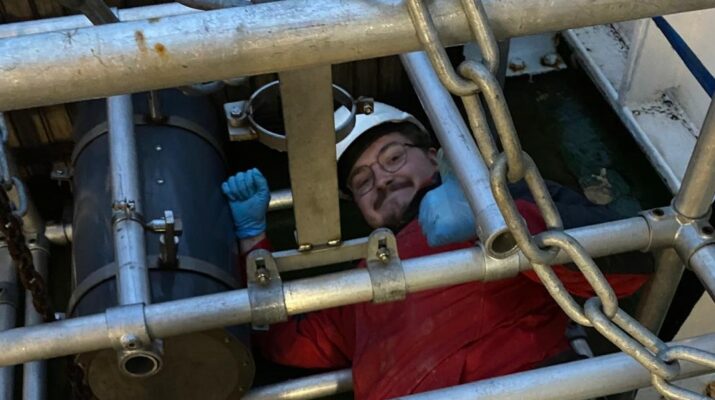
Jethro Reading (He/Him)
PhD Student – Mesopelagic Fish Ecomorphology
School of Ocean & Earth Sciences, University of Southampton
Email: jgjr1g18 [ a.t ] soton.ac.uk
BlueSky: @jethroreading32.bsky.social
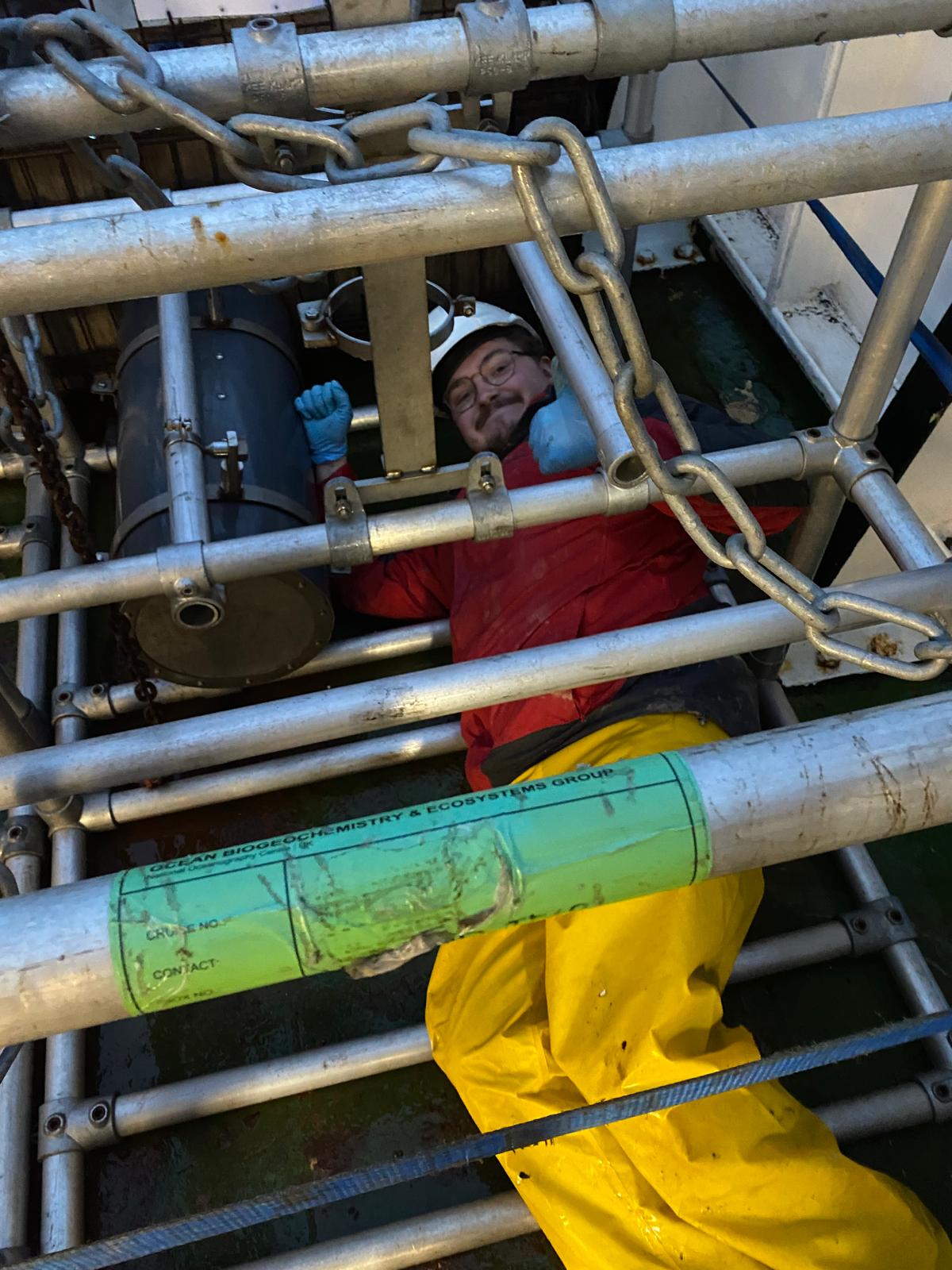
What has been your personal journey into the deep-sea?
According to my parents, I’ve been fascinated by fish since before I could talk! I’ve always been interested in the deep sea in general but first focused on the fishes that live there during my MSci project at the University of Southampton, where I was lucky enough to spend a few months identifying preserved mesopelagic specimens from the Discovery Collections at the National Oceanography Centre, Southampton, also spending a few days working at the London Natural History Museum for the first time. After finishing my degree, I stayed on for two years as a research technician at the UoS, studying the biogeochemical importance of these fishes, a role which also allowed me to sail on my first research cruises, before finally starting my PhD here in the autumn of 2024.
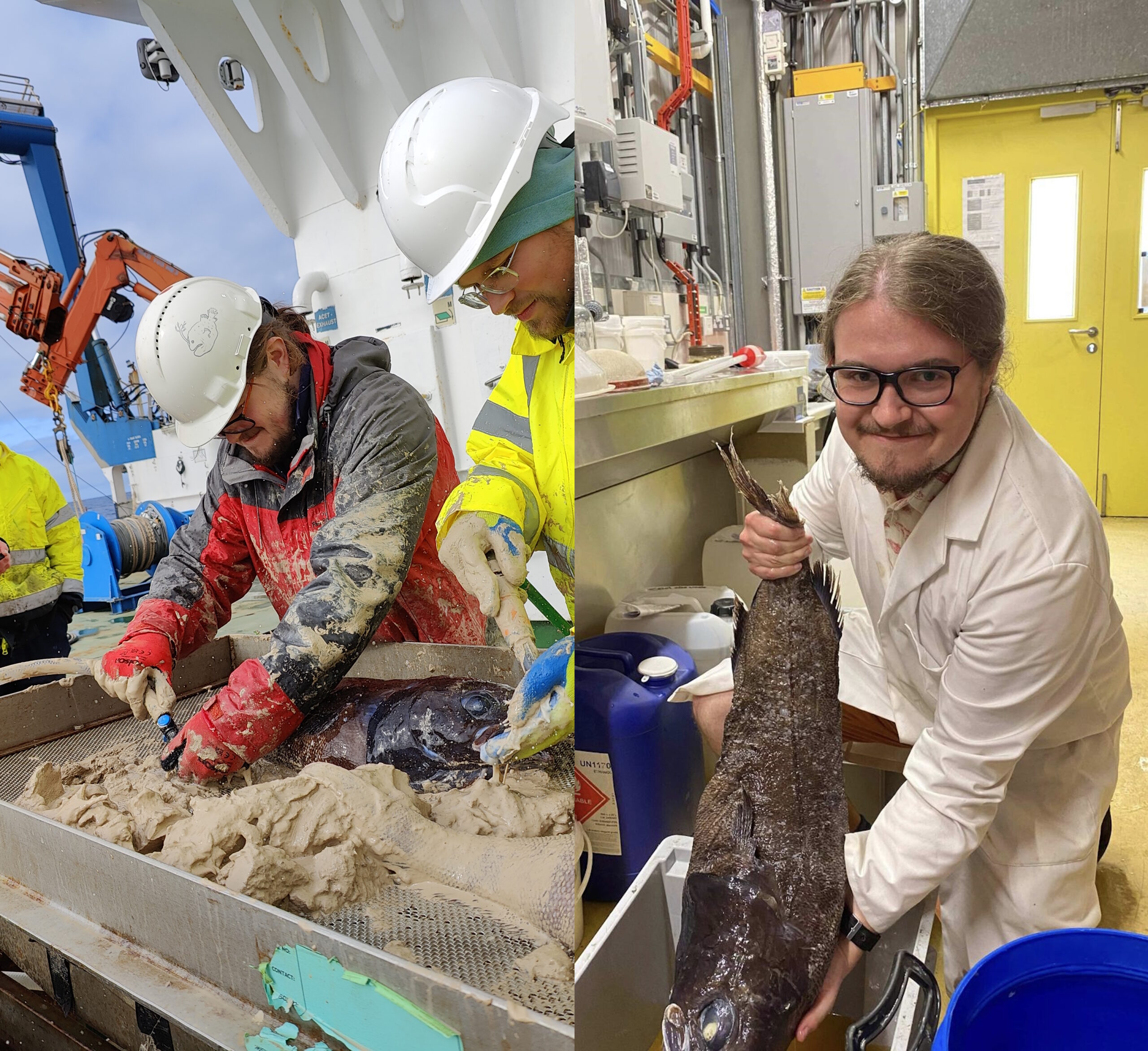
Image credits: not known, Tammy Horton
What is your current research question and why are you interested in this topic?
My PhD is focused on characterising the functional and morphological diversity of deep pelagic fishes and relating this diversity to metabolic rate – the speed at which animals use energy, which is a fundamental parameter in ecology. Deep pelagic fishes are hugely diverse, with >1500 species including iconic, bizarre animals like anglerfishes, gulper eels, and barreleyes. Many of the strange adaptations these fish have are often thought of as being related to the low availability of food in the deep ocean, however it has historically been difficult to definitively link metabolism to these traits. New techniques, especially the otolith-based proxy for metabolic rate that I use, are changing this though!

What have been some challenges in your work or in studying the deep sea in general?
Because sampling deep pelagic fishes is a costly, laborious, and time-consuming activity, it has been difficult at times to get large enough sample sizes, especially of less common species and groups. This seems absurd when you remember that deep pelagic fishes are the most common vertebrates on earth, with perhaps 10 billion tonnes in the world’s oceans! Thanks to collaboration with colleagues from the UK and abroad, though, I have now built up a sizeable collection of fishes to analyse – I’m always eager for more though!
Why is this work important to you and society as a whole?
Deep pelagic fishes are a huge, globally distributed community that play key roles in the functioning of the ocean. Through vertical migrations, many of these fishes shuttle carbon into the deep ocean, sequestering it from the atmosphere for >100 years. They also serve as food for a number of charismatic and commercially important species such as tuna and whales. Like so many communities, though, anthropogenic pressures such as climate change, intensified fishing, and pollution from deep sea oil and mineral extraction may threaten deep pelagic fishes – it is important that we study them now, as you can’t protect what you don’t understand!
Can you describe what the deep-sea science community is like in your region?
Something I really like about studying here in Southampton is how many disciplines are represented among my colleagues and how eager people are to discuss their work – I really appreciate being surrounded by experts in other parts of ocean science to pester with any random questions I have! I’m also always surprised at how willing people are to share samples and data between institutions and even nations – I think perhaps there’s a recognition that, because these specimens are so difficult to sample, it’s best to extract as much data from each animal as possible.
What is your current position?
I am just coming towards the end of the first year of my PhD, which is funded under the UKRI’s INSPIRE DTP at the University of Southampton, with additional supervisors at the NOC and the NHM in London. Having the freedom to pursue my own research and investigate the quirks of the deep pelagic fish community that really capture my interest is wonderful. I’ve also been lucky enough to take part in a lot of fieldwork – I will be sailing on my eighth research cruise soon!
What advice could you offer to aspiring deep-sea biologists?
Especially when starting out, it’s worth building up a broad knowledge base on natural science – context is everything! The oceans are an interconnected system and having even a basic grasp of how things work elsewhere will help you understand what is going on in the deep sea. I’m very grateful for the focus on physical oceanography towards the start of my undergraduate degree. Also, if you are working in the field or the lab, things will go wrong – having the patience to get through that and then try again is absolutely essential!
What project do you look forward to in the future?
Something I think is particularly cool about my current project is how it extracts so much information about wild, living fish from specimens in the lab and natural history collections. Since we have more in situ video of deep-sea animals available now than ever before, I think it would be really cool to tie together the data I’m collecting with footage of live animals to really understand the functions of different traits unique to this community.
What is your favourite thing about the deep sea?
The fish, of course! Something I find particularly eye-opening is the idea that, since >50% of fish live in the deep sea, these fish that we consider weird are, in reality, the normal ones. If you picked a fish from somewhere on earth at complete random, the law of averages says it would probably be something that glows in the dark, has teeth like miniature corkscrews, and changes sex – how cool is that!
Jethro spontaneously sent this contribution to our Meet the Next-Generation of Deep-Sea Scientists – thanks!
Please visit our early career researcher profiles and send your contribution!
