

Flávia Tiemi Masumoto
Oceanographic Institute of the University of São Paulo, Brazil
Contact: flavia.masumoto [ a.t ] usp.br
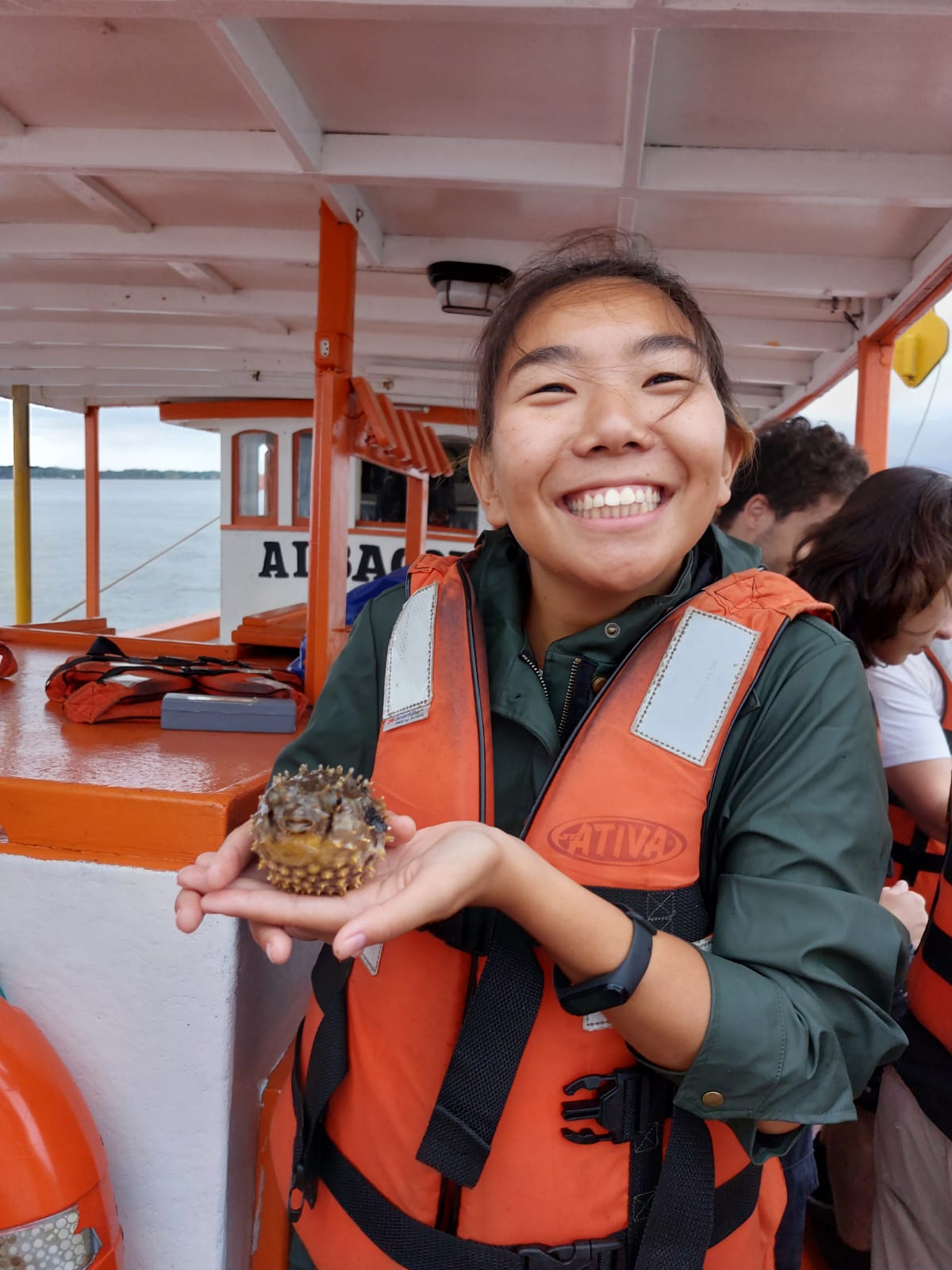
Hi everyone,
I’m Flávia Masumoto. I earned my bachelor’s degree in Oceanography at the University of São Paulo, Brazil, and I am currently a master’s degree student at the same institution. During my undergraduate studies, I joined the Laboratory of Diversity, Ecology, and Evolution of Fishes (DEEP Lab), coordinated by Prof. Dr. Marcelo Melo, where I still work today. There, I had the opportunity to participate in two expeditions of the DEEP-OCEAN project, whose main objective was to improve knowledge about deep-sea fishes in Brazilian waters, using bottom trawl nets and fish traps for sampling.
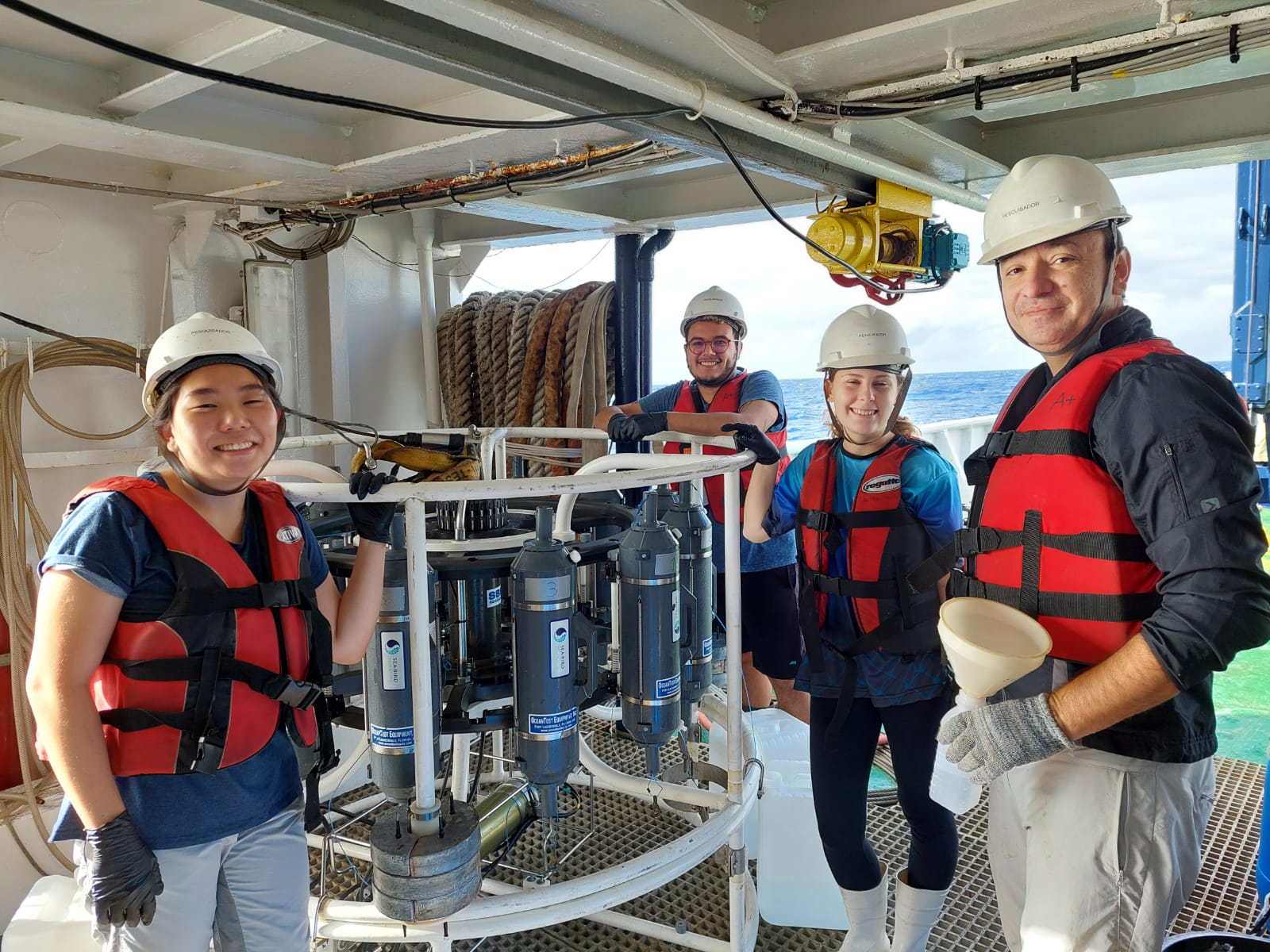
It was my first time on a research vessel and a huge opportunity that started guiding my path toward deep-sea research. During the expeditions, I observed many different and unique species of fish and invertebrates, such as deep-sea corals, ophiuroids, and anemones, including new and rare ones. I also gained valuable experience working in the field, performing practical tasks such as sorting specimens, collecting tissue samples for molecular analysis, sampling water for eDNA, and more. This experience helped me discover how much I enjoy working on board and engaging in hands-on activities!
Despite all the biodiversity we sampled, what shocked me the most as an undergraduate student was the amount of macro-litter found among the organisms and the biodiversity associated with it, which captured my attention. We separated the litter by station and brought it back to the lab.
After the first expedition, there was no turning back—I knew I wanted to focus my research on the marine litter we sampled. I began my scientific initiation project, sorting and classifying the litter by material, and then counting and weighing it all. One of my biggest surprises was discovering that there were no publications about deep-sea litter sampling in the southwestern Atlantic! During the second expedition, now more experienced and having read up on the subject, I was more meticulous. In addition to separating the litter, I also removed all the associated biota and preserved them in 96% alcohol for further analysis to identify the species present and assess the direct impact of the litter on them.
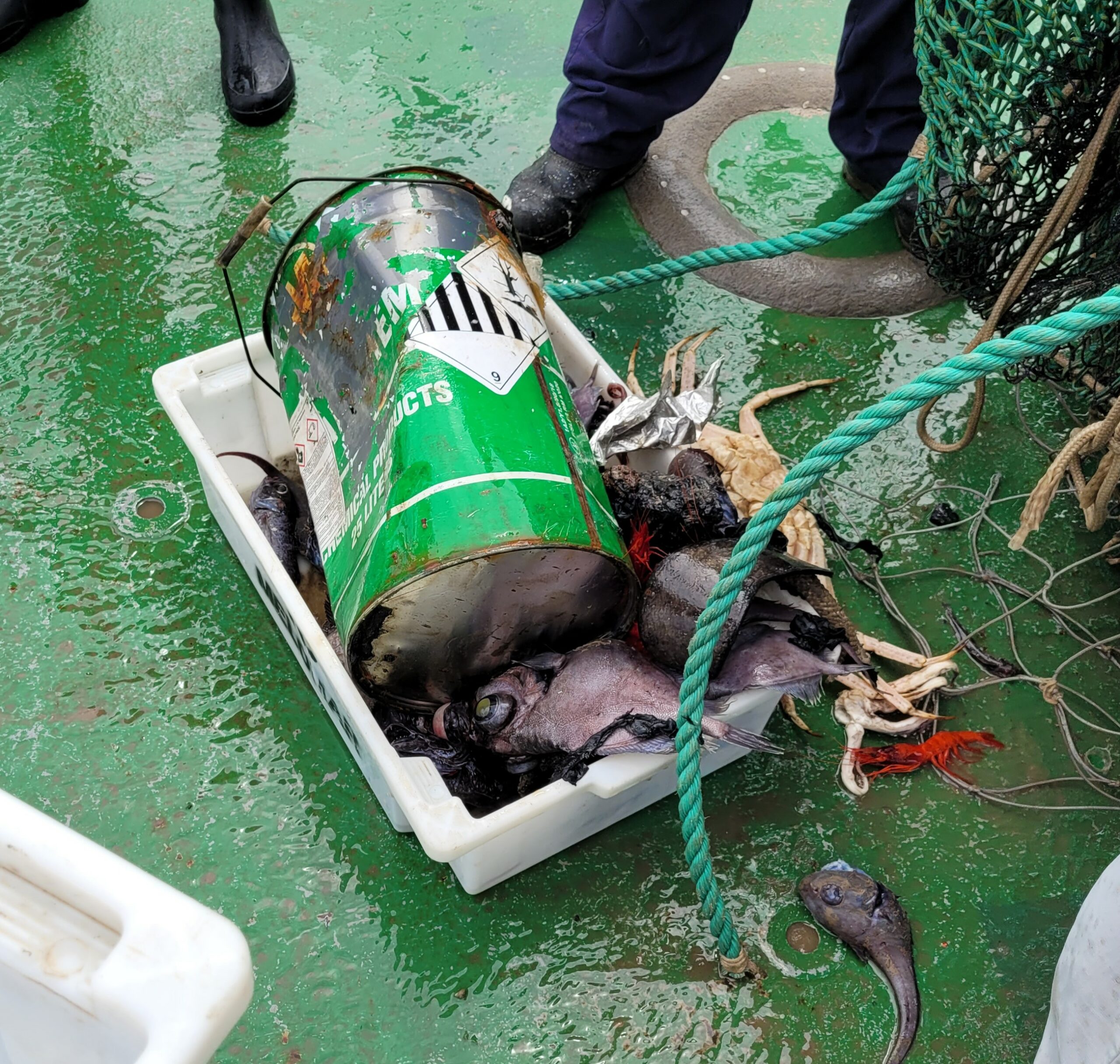
After two years of working on this project, I completed my undergraduate thesis, combining all the litter we sampled with the organisms that were using it as a substrate. As a result, we published an article reporting with the first report and characterization of litter sampled in the area (DOI: 10.2139/ssrn.4467286), and more publications are on the way. We found all kind
For my master’s degree, I was encouraged to continue this work, but now with a focus on the impacts of litter. This led me into the world of microplastics, where I am investigating their presence in the fish sampled during these expeditions. Entering this field has been a fascinating journey, as I’ve had to learn new processes and analytical techniques. Now, halfway through my master’s degree, I am excited to have the opportunity to share my research with the deep-sea community at the 17th Deep Sea Biology Symposium, thanks to the Conference Support Awards.
Flávia received a Conference Support Award in 2023
