Michelle Neitzey, PhD Candidate
Rachel O’Neill Lab
Department of Molecular and Cell Biology
University of Connecticut, Storrs, CT
Contact: michelle.neitzey [ a.t ] uconn.edu
Can deep-sea corals adapt to climate change?
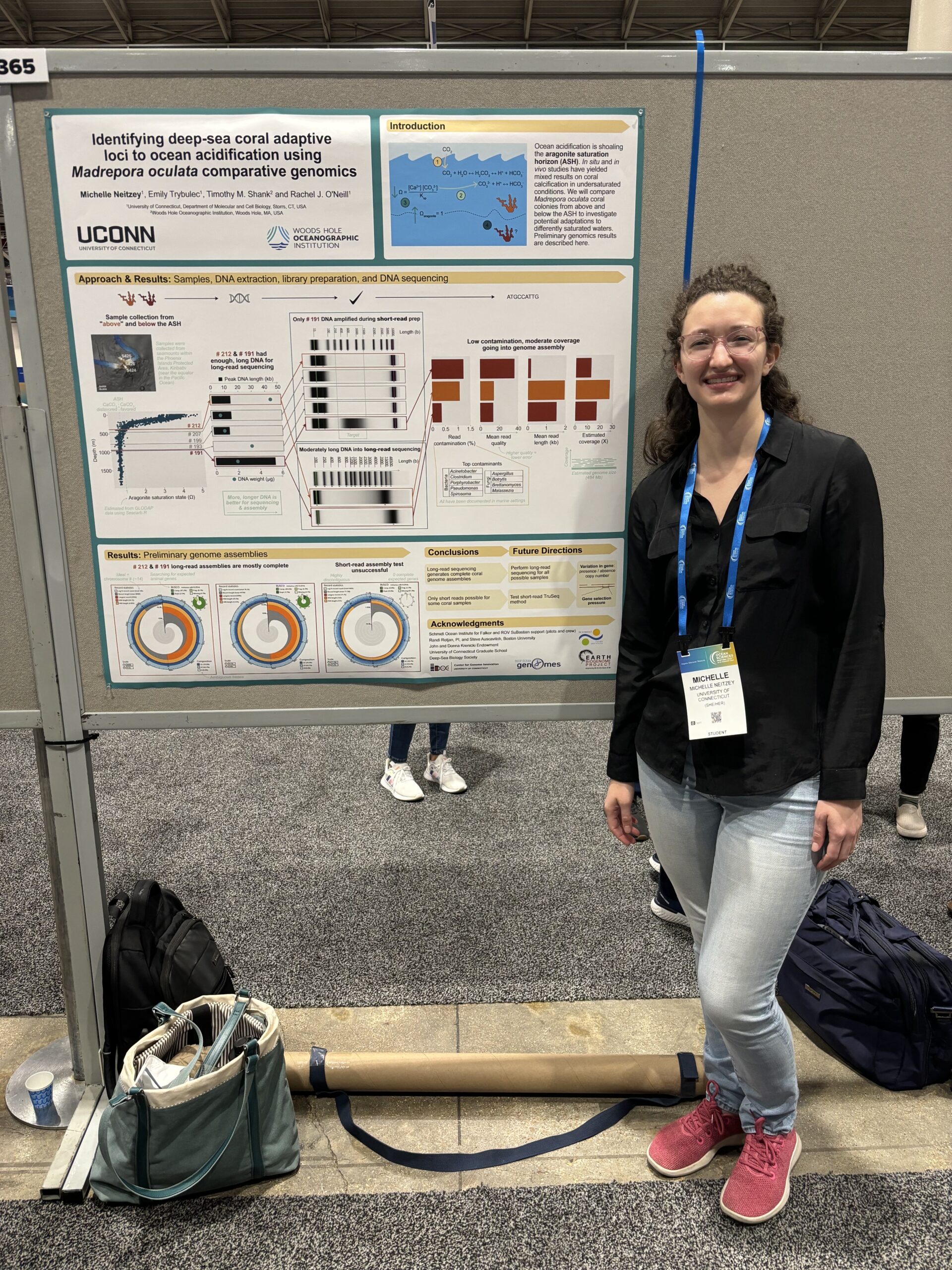
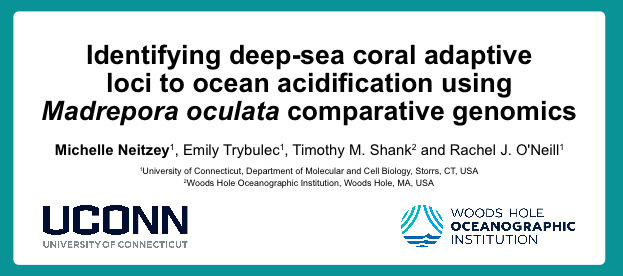
Deep-sea corals are found around the globe, and are rich hubs of biodiversity. They are threatened by rising ocean temperatures, deoxygenation, and ocean acidification. Ocean acidification presents an interesting dilemma – will corals be able to maintain their skeletons in acidifying conditions? Therefore, my work involves comparing genomic data of the deep-sea corals from lower calcium carbonate availability to those in higher availability to identify candidate adaptive genetic loci. To enable this work, Timothy Shank of Woods Hole Oceanographic Institute with Schmidt Ocean Institute, collected coral samples along a gradient of calcium carbonate availability. Thanks to the 2023 Conference Award from the Deep-Sea Biology Society, I was able to present my data and research plans at the Ocean Sciences Meeting in New Orleans, LA this past February.
My name is Michelle Neitzey. I am a PhD Candidate studying at the University of Connecticut in the Department of Molecular and Cell Biology under Rachel O’Neill. I am the only person in my lab who studies invertebrates so attending and presenting at the Ocean Sciences Meeting was my first opportunity to meet and network with other deep-sea scientists face-to-face.
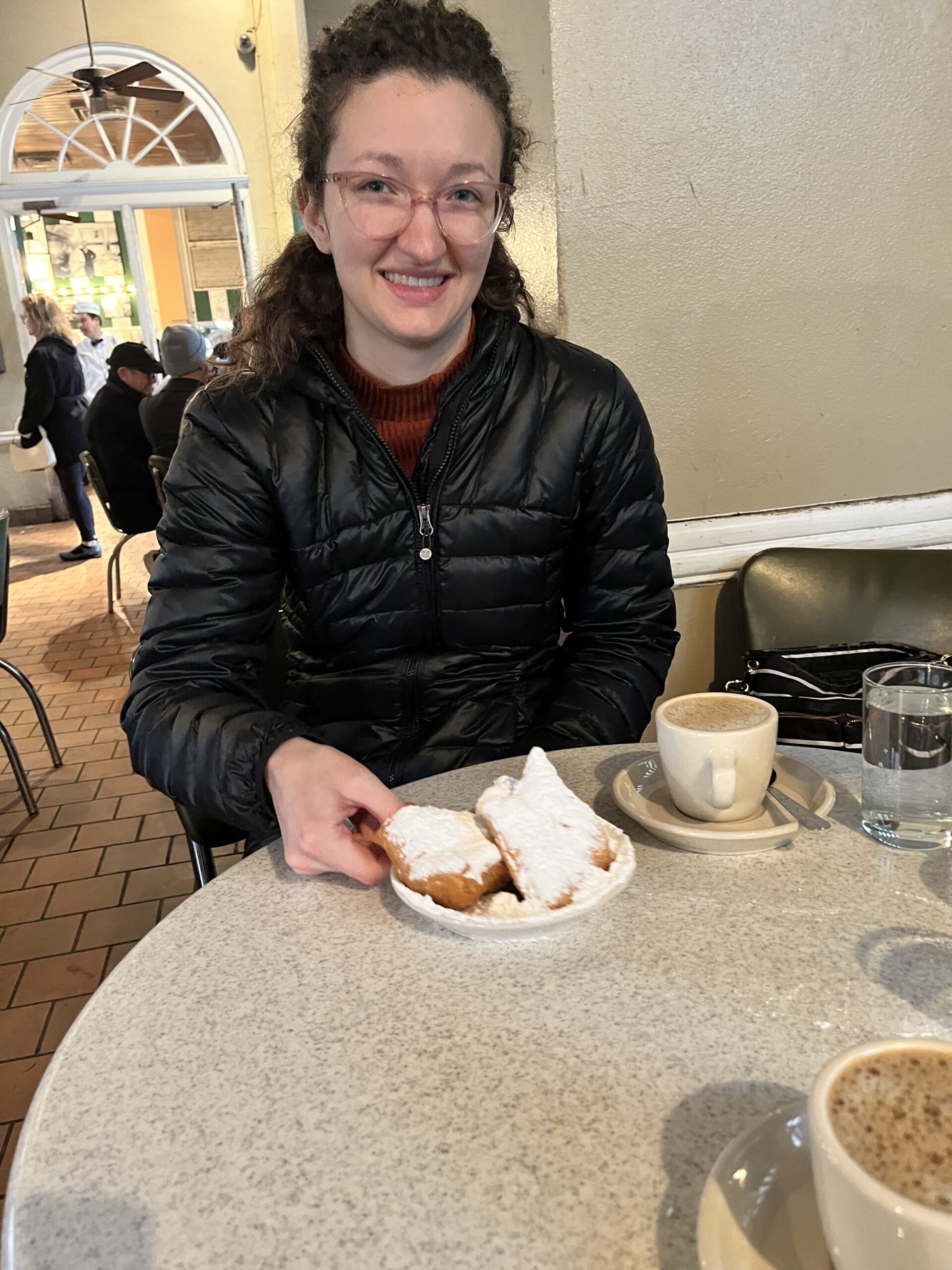
During the conference, I had many great opportunities to discuss my work with colleagues and gain valuable insight to further my research. Dr. Santiago Herrera, who co-published the first deep-sea Scleractinia genome, introduced me to the technique of using a water flosser to separate coral tissue from skeleton to get cleaner DNA for sequencing. I’ve since tried this technique on my own samples successfully! Additionally, colleagues suggested I add nutrient data to my calcium carbonate availability estimations to increase accuracy. I also received helpful insights from colleagues, such as Dr. Sebastian Hennige, who are asking similar questions from different angles. The most surprising connection was when I attended a session on marine-based carbon dioxide removal, where Dr. Cheryl Harrison presented predicted effects of Stratospheric Aerosol Injection on the ocean – including impacts on calcium carbonate availability. I have since connected with Dr. Harrison’s student who is studying this work further. This was my first trip to New Orleans, and I loved it! Especially the beignets.
Thank you so much Deep-Sea Biology Society for this opportunity! I look forward to sharing the findings from this study with friendly faces!
Michelle received a Conference Support Award in 2023