
17 October, 2020
A giant of deep-sea biology
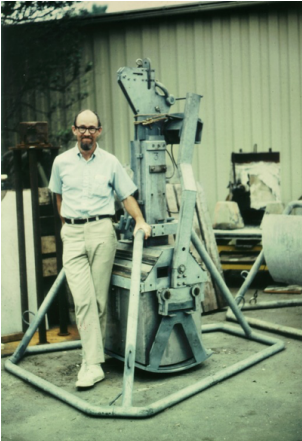
Deep-sea biology lost a giant when Robert (Bob) R. Hessler passed away on 17 October, 2020 at the age of 87. Bob had a profound influence on the field and people of deep-sea biology, pioneering use of the HOV Alvin in the mid 1960’s, fundamentally advancing our understanding of deep-sea biodiversity from sediments to hydrothermal vents, developing key oceanographic equipment used to sample and study deep-sea ecosystems, and inspiring and training a remarkable number of talented deep-sea scientists. Bob’s career in deep-sea biology began serendipitously at Woods Hole Oceanographic Institution in 1960, spanned decades at Scripps Institution of Oceanography from 1969 – 2000, and extended beyond his retirement.
Bob’s many, many contributions to our understanding of deep-sea biology were summarized as follows in the special 1998 volume of Deep-Sea Research II titled ‘Deep-sea biodiversity: a tribute to Robert R. Hessler’, honoring his impending retirement (Smith et al., 1998).
“Although the deep-ocean fauna had been sampled since the Challenger Expedition in 1872, the biodiversity of the deep-sea floor was unappreciated until the year 1967, when Hessler and Sanders published their now classic paper “Faunal Diversity in the Deep-Sea”. This publication was the first of many works authored or co-authored by Hessler elucidating the biodiversity of deep-sea ecosystems. Hessler’s remarkable contributions range from design of sampling equipment, through community characterization and ecological theory, to taxonomic description and phylogenetic analysis. Below we highlight some of his most noteworthy contributions to the study of deep-sea biodiversity. Because of the great breadth of his work, it is inevitable that we will fail to mention many of his contributions.
“In 1967, Hessler and Howard Sanders provided the first quantitative analysis of large deep-sea macrofaunal samples, discovering remarkable levels of species richness (up to 365 species) in epibenthicsled hauls from 1400 to 4700 m depths along the Gay Head-Bermuda Transect. This is among the most widely cited papers documenting high deep-sea species diversity, and is the seminal work in the now 30 yr old debate on mechanisms maintaining species diversity in the deep ocean. Interestingly, Hessler’s and Sanders’ results are remarkably similar to those from the more intensive study of Grassle and Maciolek (1992); in fact, Grassle and Maciolek suggest that the main reason for higher species richness in their own study is that major advances in deep-sea systematics (produced in part by Hessler, see below) now allow identification of many more species than could be resolved in 1967. The Hessler and Sanders (1967) paper is also noteworthy because it introduced (1) the subsequently widely used epibenthic sled and (2) the sled-sample collection from the Gay Head-Bermuda Transect. The Gay Head-Bermuda samples have figured prominently in numerous studies of deep-sea diversity (e.g. Rex, 1973, 1976, 1983; Etter and Rex, 1990; Rex et al., 1993), including papers in this volume (Rex and Etter; Pineda and Caswell; Wilson). These sled samples also provided material for Hessler’s (1970) monograph. “The Desmosomatidae (Isopoda, Assellota) of the Gay Head-Bermuda Transect”, which is regarded by carcinologists as a classic study of the systematics of deep-sea isopods (Torben Wolff, personal communication). Following their 1967 paper, Hessler and Sanders collaborated on a pair of influential publications in Science dealing with the diversity and ecology of North Atlantic deep-sea benthos (Sanders and Hessler, 1969a, b).
“In 1972, as ecologists pondered the causes of high deep-sea species diversity, Hessler and Paul Dayton (Dayton and Hessler, 1972) introduced the “cropping hypothesis”, suggesting that competitive exclusion in deep-sea macrofauna is prevented by predation from mobile mega- and macrobenthos; thus, a high diversity of competing species could coexist. This theory still figures prominently in discussions of deep-sea diversity maintanence and is the topic of current experimental studies in the deep sea (D. Thistle and J. Eckman, pers. commun.).
“The 1974 paper by Hessler and Jumars, titled “Abyssal Community Analyses from Replicate Box Cores in the Central North Pacific”, yielded another major advance in the appreciation of deep-sea diversity. This was the first study to document high diversity on local (1 m2) scales in the deep sea, and demonstrated that a plethora of deposit-feeding species could coexist even in the most oligotrophic of deep-ocean habitats. This paper also introduced the USNEL box corer as a quantitative sampler for deep-sea macrofauna; the box corer continues to be used throughout the world in studies of infaunal benthos.
“Hessler’s work has not been restricted to the fauna living on or in soft sediments. Through baited camera and trap studies, Hessler helped demonstrate that mobile scavengers, such as large amphipods and macrourid fish, are a ubiquitous component of deep-sea communities (Hessler et al., 1972, 1978; Dayton and Hessler, 1972; Shulenberger and Hessler, 1974; Ingram and Hessler, 1983). This work substantially expanded appreciation for the range of niches and adaptations present in deep-sea ecosystems. In the late 1970s and early 1980s, Hessler became concerned about environmental threats to deep-sea biodiversity posed by manganese-nodule mining and radioactive waste disposal. He helped plan and conduct programs to evaluate nodule-mining effects on seafloor communities (e.g. National Research Council, 1984; Wilson and Hessler, 1987b), and contributed substantially to studies of the hazards of subseabed disposal of high-level nuclear wastes (e.g. Hessler and Jumars, 1979). A number of important papers addressing basic deep-sea ecology emerged from these environmental impact studies (e.g. Snider et al., 1984; Ingram and Hessler, 1983, 1987). As is widely recognized, Hessler has also been a major player in studies of the ecology and phylogeny of the hydrothermalvent fauna. He participated in the first biological cruise to deep-sea vents on the Galapagos Spreading Center in 1979, and has authored or co-authored papers on the community structure, dispersion patterns, succession, population genetics, endosymbiosis, taxonomy and biogeography of vent biota (e.g. Hessler and Smithey, 1983; Hessler et al., 1985, 1988; Smith and Hessler, 1987; Johnson et al., 1988; Stein et al., 1988; Hessler and Lonsdale, 1991; France et al., 1992). Many of the more dramatic early photographs of vent ecosystems viewed by the general public were obtained from Hessler’s specially designed stereo camera mounted on Alvin’s manipulator.
“To round out his research of relevance to deep-sea biodiversity, Hessler has contributed substantially to elucidation of the systematics and evolution of the deep-sea fauna. Groups that have received his particular attention include the cephalocarids (e.g. Hessler and Sanders, 1972), isopods (e.g. Hessler, 1970; Hessler and Thistle, 1975; Hessler et al., 1979), leptostracans (Hessler, 1984), malacostracans (Hessler and Wilson, 1983), komokiacean Foraminifera (Tendall and Hessler, 1977), and the deep-sea fauna in general (Wilson and Hessler, 1987a). The breadth of these studies is truly impressive.
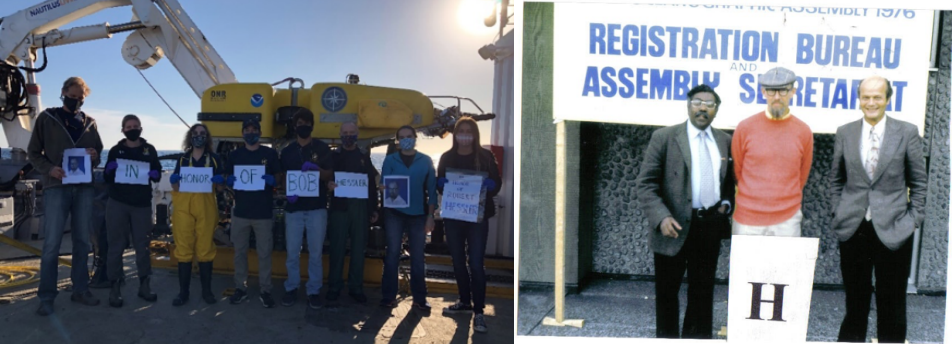
“Hessler has, more than ny other scientist, shaped the face of current deep-sea research through the training of graduate students. Hessler chaired or co-chaired the Ph.D. committees of Frank Rowkop, Peter Jumars, David Thistle, Joe Siebenaller, Leslie Snider, Craig Smith, George Wilson, Lauren Mullineaux, Michel Boudrias, Joan Bernhard, and Scott France, and helped to inspire other students such as Lisa Levin, Jesus Pineda, James Barry and Eric Vetter. Many Hessler students have made significant contributions to the study of deep-sea biodiversity and ecology…
“In summary, Robert Hessler has profoundly influenced our understanding of deep-sea biodiversity and of deep-sea biology in general.”
It is difficult to imagine what our current understanding of deep-sea biodiversity would be if Hessler had not joined the Woods Hole Oceanographic Institution after earning his Ph.D. in paleontology at the University of Chicago in 1960 and been encouraged by Howard Sanders to work in the deep ocean. At Scripps, Bob was the first biology faculty member with a nearly exclusive focus on the deep sea.
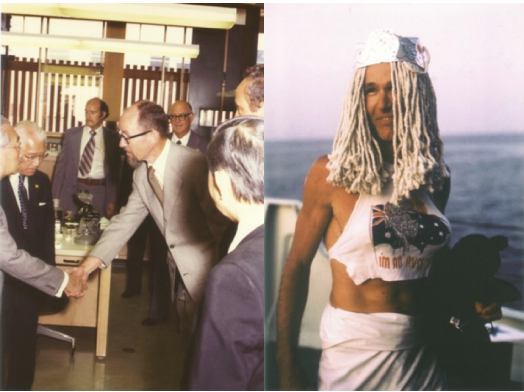
Bob authored or co-authored more than 130 papers on deep-sea biology and biodiversity, the functional morphology and evolution of marine arthropods, and the potential environmental impacts of manganese nodule mining. Bob was also very instrumental in making “deep-sea biology” a major, collaborative, international field of study. He was the first to organize an international meeting called the International Deep-Sea Biology Symposium, which now meets every three years and draws more than 400 scientists from at least 30 countries. He hosted a long list of international colleagues, postdocs and students at his lab at Scripps, stimulating a collaborative spirit across deep-sea biology. Bob was passionate and adventurous in his desire to understand deep-sea ecosystems, inspiring students and colleagues alike. As Tony Rice said: “What a giant he was, with a mind like a surgeon’s scalpel.” Myriam Sibuet points out: “He was a mentor during my early career in abyssal biology. He encouraged me in my early days of Echinoderm taxonomy and also opened my way to ecology by working on species diversity.” And from Hjalmar Thiel “There was a common sense between Bob and myself, and in addition to our interests in science and ocean protection a life-long friendship developed”. Paul Tyler comments “Bob had a universal influence in deep-sea biology and although geographically distanced from him he offered me valuable advice and guidance in the earlier parts of my career”. Bob George recalls “I first met Dr. Hessler along with Dr. Howard Sanders and Dr. Bob Higgins in1963 in Madras India when they came to study marine benthic diversity in the Bay of Bengal. I arranged a “Catamaran” cruise and we successfully took several anchorage dredge samples. This study led to the paper by Hessler and Sanders to prove their “Time Stability Hypothesis.” Bob was affable and had the gift of deep dedication to deep-ocean ecology. We all lost a great deep-sea ecologist who deeply cared for saving marine biodiversity.”
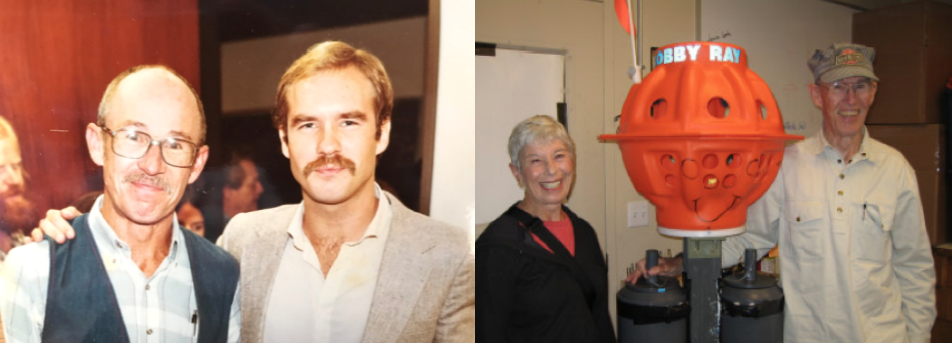
Bob also excelled as a teacher. His classes and lectures on deep-sea biology, hydrothermal vent ecology, and marine arthropods were extremely popular at Scripps and elsewhere. He was an extraordinary, beloved adviser of graduate students, and in 1999 was the first Scripps professor to win the Distinguished Teaching Award from the University of California at San Diego Academic Senate. In nominating remarks for the award, colleagues noted that Hessler had enticed students with world-class teaching and advised graduate students for the past 27 years. They added that his contributions included shaping, perpetuating and invigorating the field of deep-sea biology.
In retirement, Bob continued to make regular visits to Sweden for his work on crustacean morphology and evolution. He also turned to another of his passions – art – devoting considerable time to painting and sculpture.
Bob will be dearly missed as a deep-sea biologist, colleague, mentor, teacher, friend, artist and outdoor enthusiast, but his memory will live on in the vibrant field and community of scientists that he helped to shape.
Craig R. Smith and Lisa A. Levin
From DSL16
References
Dayton, P.K., Hessler, R.R., 1972. Role of biological disturbance in maintaining diversity in the deep-sea. Deep-Sea Research, 19, 199-208.
Etter, R.J., Rex, M.A., 1990. Population differentiation decreases with depth in deep-sea gastropods. Deep-Sea Research 37, 1251-1261.
France, S.C., Hessler, R.R., Vrijenhoek, R.C., 1992. Genetic differentiation between spatially disjunct populations of the deep-sea, hydrothermal vent-endemic amphipod Ventiella sulfuris. Marine Biology 114, 551-559.
Grassle, J.F., Maciolek, N.J., 1992. Deep-sea species richness: regional and local diversity estimates from quantitative bottom samples. American Naturalist 139, 313-341.
Hessler, R.R., 1970. The Desmosomatidae Isopoda, Asellota) of the Gay Head-Bermuda Transect. Bulletin of the Scripps Institution of Oceanography 15, 1-185.
Hessler, R.R., 1984. Dahliella calderiensis, new genus, new species: a leptostracan (Crustacea, Malacostraca) from the deep-sea hydrothermal vents. Journal of Crustacean Biology 4, 655-664.
Hessler, R.R., Ingram, C.L., Yayanos, A.A., Burnett, B.R., 1978. Scavenging amphipods from the floor of the Philipine Trench. Deep-Sea Research 25, 1029-1047.
Hessler, R.R., Isaacs, J.D., Mills, E. L., 1972. Giant amphipod from the abyssal Pacifc Ocean. Science 175, 636-637.
Hessler, R.R., Jumars, P.A., 1974. Abyssal community analysis from replicate box cores in the Central North Pacifc. DeepSea Research 21, 185-209.
Hessler, R.R., Jumars, P. A., 1979. The relation of benthic communities to radioactive waste disposal in the deep-sea. Ambio Special Report 6, 93-96.
Hessler, R.R., Lonsdale, P.F., 1991. Biogeography of Mariana Trough hydrothermal vents. Deep-Sea Research 38, 185- 199.
Hessler, R.R., Sanders, H.L., 1967. Faunal diversity in the deep-sea. Deep-Sea Research 14, 65-78.
Hessler, R.R., Sanders, H.L., 1972. Two new species of Sandersiella (Cephalocarida) including one from the deep sea. Crustaceana 24, 181-196.
Hessler, R.R., Smithey, W.J. Jr., 1983. The distribution and community structure of megafauna at the Galapagos Rift
hydrothermal vents. In: Rona, P., Bostrom, K., Laubier, L., Smith, K. Jr., (Eds.), Hydrothermal Processes at Seafloor Spreading Centers. Plenum, New York, pp. 735-770.
Hessler, R.R., Smithey, W.M. Jr., Keller, C.H., 1985. Spatial and temporal variations of giant clams, tube worms and
mussels at deep-sea hydrothermal vents. Bulletin of the Biological Society in Washington 6, 411-428.
Hessler, R.R., Thistle, D., 1975. On the place of origin of deep-sea isopods. Marine Biology 32, 155-165.
Hessler, R.R., Wilson, G.D.F., 1983. The origin and biogeography of malacostracan crustaceans in the deep sea. In: Sims, R W., Price, J.H., Whalley, P.E.S. (Eds.), Evolution, Time and Space: The Emergence of the Biosphere. Academic Press, London, pp. 227-254.
Hessler, R.R., Wilson, G.D., Thistle, D., 1979. The deep-sea isopods: A biogeographic and phylogenetic overview. Sarsia 64, 67-75.
Hessler, R.R., Smithey, W.M., Boudrias, M.A., Keller, C.H., Lutz, R.A., Childress, J.J., 1988. Temporal change in megafauna at the Rose Garden hydrothermal vent (Galapagos Rift; eastern tropical Pacifc). Deep-Sea Research 35, 1681-1709.
Ingram, C.L., Hessler, R.R., 1983. Distributional and behavioral patterns of scavenging amphipods from the central North Pacifc. Deep-Sea Research 30, 683-706.
Ingram, C.L., Hessler, R.R., 1987. Population biology of the deep-sea amphipod Eurythenes gryllus: inferences from in situ analyses. Deep-Sea Research 34, 1889-1910.
Johnson, K.S., Childress, J.J., Hessler, R.R., Sakamoto-Arnold, C.M., Beehler, C.L., 1988. Chemical and biological interactions in the Rose Garden hydrothermal vent field, Galapagos spreading center. Deep-Sea Research 35, 1723-1744.
National Research Council, 1984. Deep Seabed Stable Reference Areas. National Academy Press, Washington, DC, 74 pp.
Rex, M.A., 1973. Deep-sea species diversity: decreased gastropod diversity at abyssal depths. Science 181, 1051-1053.
Rex, M.A., 1976. Biological accommodation in the deep-sea benthos: comparative evidence in the importance of predation and productivity. Deep-Sea Research 23, 975-987.
Rex, M.A., 1983. Geographic patterns of species diversity in the deep-sea benthos. In: Rowe, G T., (Ed), The Sea vol. 8: Deep-Sea Biology. Wiley Interscience, New York, pp. 453-472.
Rex, M.A., Stuart, C.T., Hessler, R.R., Allen, J.A., Sanders, H.L., Wilson, G. D., 1993. Global scale lattitudinal patterns of species diversity in the deep-sea benthos. Nature 365, 636-639.
Sanders, H.L., Hessler, R.R., 1969a. Diversity and composition of abyssal benthos. Science 166, 1034.
Sanders, H.L., Hessler, R.R., 1969b. Ecology of the deep-sea benthos. Science 163, 1419-1424.
Shulenberger, E., Hessler, R.R., 1974. Scavenging abyssal benthic amphipods trapped under oligotrophic central North PaciFc Gyre waters. Marine Biology 28, 185-187.
Smith, C.R. and R. R. Hessler. 1987. Colonization and succession in deep-sea ecosystems. Trends in Ecology and Evolution 2: 359-363.
Smith, C.R., L. A. Levin and L. S. Mullineaux. 1998. Deep-Sea Biodiversity: A tribute to Robert R. Hessler. Deep-Sea Research II, 45, 1-12.
Snider, L.J., Burnett, B.R., Hessler, R.R., 1984. The composition and distribution of meiofauna and nanobiota in a central North Pacifc deep-sea area. Deep-Sea Research 31, 1225-1249.
Stein, J., Cary, S.C., Hessler, R., Ohta, S., Vetter, R., Childress, J., Felbeck, H., 1988. Chemoautotrophic symbiosis in a hydrothermal vent gastropod. Biological Bulletin 174, 373-378.
Tendall, O.S., Hessler, R.R., 1977. An introduction to the biology and systematics of Komokiacea (Textulania, Foraminifera). Galathea Report 14, 1-104.
Wilson, G., Hessler, R., 1987a. Speciation in the deep sea. Annual Review of Ecological Systematics 18, 185-207.
Wilson, G., Hessler, R., 1987b. The e¤ects of manganese nodule test mining on the benthic fauna in the North Equatorial PaciFc. In: Spiess, F., Hessler, R., Weydert, M. (Eds.), Environmental effects of Deep-Sea Dredging. Scripps Institution of Oceanography, La Jolla, CA, pp. 24-86.
