
Renowned microbial biologist, Professor Craig Cary, leaves a legacy in extreme ecosystems
08 Mar 2024
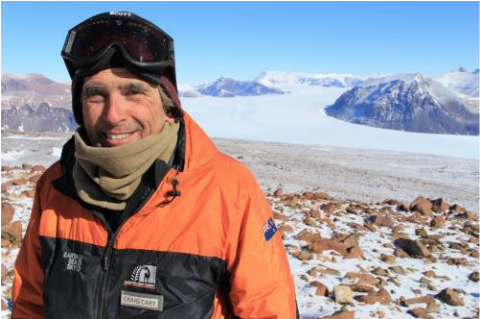
It is with great sadness that we report that Professor Craig Cary, who dedicated his life to research in some of the world’s toughest environments, passed away in March this year aged just 69. This obituary text was adapted from the full obituary by the University of Waikato, NZ, where he worked for 20 years.
40 years of research
Professor Cary dedicated 40 years to the study of microbial life in extreme environments, including deep-sea hydrothermal vents and Antarctic soils. Craig participated in over 29 deep-sea expeditions to hydrothermal vents, 45 dives in research submersibles and spent 18 seasons conducting groundbreaking research in Antarctica with over 22 deployments – something only a handful of people across New Zealand have had the honour of doing. His last visit to Antarctica was in November 2023.
Appointments and accolades
Craig held several key roles at the University, including Assistant Vice-Chancellor PBRF, Director of the International Centre for Terrestrial Antarctic Research, Director of the DNA Sequencing Unit and Associate Dean Research within the School of Science, and was Professor of Biomedical, Molecular and Cellular Biology. His research also established close ties with Antarctica New Zealand where he also served as Deputy Director and then Director of the New Zealand Antarctic Research Institute.
Born in the United States, Craig earned his Bachelor of Science at the Florida Institute of Technology in 1976, and a Master of Science at San Diego State University in 1982. He completed his PhD at the University of California, San Diego’s Scripps Institution of Oceanography in 1989.
In the early 90s, Craig worked as a postdoctoral Research Assistant at Oregon State University and took his first academic position at the University of Delaware in 1994. During this time, he researched the deepest parts of the ocean aboard the manned Deep Sea Submersible Alvin. Craig joined the University of Waikato in 2004 but continued to work part time at the University of Delaware.
Generous personality
Beyond his scholarly achievements, Craig was known for his unwavering passion for mentorship. Countless students and colleagues benefited from his guidance, and his positive influence will be felt for years to come.
From Craig’s arrival at Waikato, he began changing the paradigm on microorganisms in Antarctica, with several seminal contributions published with international coauthors in Nature journals.
In his early research career at the University of Delaware, Craig made many trips to the deep ocean floor aboard the Deep Sea Submersible DSV Alvin. From the DSV Alvin, Craig and his colleagues conducted in situ experiments and collected samples that allowed them to define previously unknown life around deep-sea hydrothermal vents.
In these deep, dark, very high-pressure environments, Craig and his collaborators discovered life thrived where the hot anoxic fluids mixed with cold oxygenated water in the ocean deep. These thermophilic microbes play an important role in converting chemical energy into food for the rest of the vent community, now known to include over 300 species. Craig and his team went on to explore and document the ‘wilderness’ of genes existing at the vents, in one of the first ever metagenomic studies of any environment.
Strong ties to Antarctica
Craig made discoveries that fundamentally changed how the scientific community views microorganisms in Antarctica. Most notably, his work led to the recognition of strong biogeographical patterns in Antarctic soil microorganisms, which has had profound scientific and biosecurity implications.
A $1m Marsden grant in 2019, saw a group of researchers complete a world first mission inside the high-temperature soils on the summit of Mount Erebus, the most southern active volcano on the planet. The group was led by Craig and discovered some of the rarest and oldest living organisms on Earth.
In March last year, Craig also undertook a world first survey for bird flu, where he monitored a colony of one million Adelie penguins, trekking nine hours in and around the colony to look for signs of infection. He also developed a robot that can sample planktonic communities under the Antarctic ice shelf to help forecast the future impacts of climate change.
Craig’s most famous discoveries centred on Alvinella pompejana, the Pompeii worm, which revealed its remarkable survival capabilities in extreme conditions – making it the most thermal-tolerant organism known to science. His findings not only expanded our understanding of extremophiles but also held potential applications in pharmaceutical production. In 2021, Craig was part of a group of international scientists that were awarded a $1.8m grant from the world-renown Human Frontier Science Program to study the evolution of the epsilonproteobacteria’s powerful flagellum.
A dedicated family man
While he will always be remembered for the passion he had for science, he was most proud of his role as a devoted husband, father, and grandfather. His family describes him as a loyal, generous, and loving man, who inspired them, along with countless students, colleagues, and young people around the world.
He and his wife Amy shared a love that spanned 35 years, and together they raised two children, Ky and Robin, whom he adored, and a grandson Rio, who he loved deeply. He was a wonderful provider who took an active role in his children’s life. He was very proud of them and the partners they had chosen.
From DSL23
