
Professor John David Gage DSc FRSE 1939 :- 2005: a personal tribute
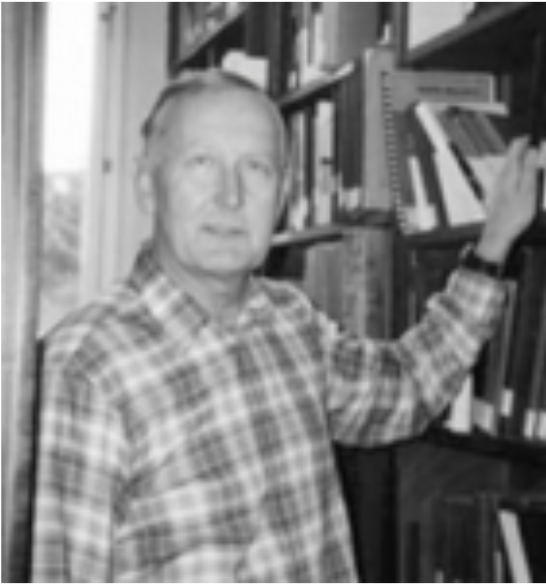
Professor John Gage died on the 18th July 2005 after a short illness. To those of us in the deep-sea scientific community we lost not only an esteemed scientific colleague but a mentor and personal friend.
John Gage was born on November 14th 1939, a native of Salisbury, Wiltshire UK. His early interest in marine biology stemmed from diving along the south coast of England. When I moved to F ordingbridge in the 1980s he would regale me with stories of stopping in ‘The George’ ( a pub) by Fordingbridge bridge and having a ‘few beers’.
John went to the University of Southampton to study Zoology in 1958 and on graduating elected to pursue a PhD on the integrative behaviours and life history of marine commensal associations. On completion of his PhD he took a post-doc under the great Howard Sanders at Woods Hole returning to the UK to take up another postdoctoral position at the MBA, Plymouth.
In 1967 he was appointed to the Scottish Marine Biological Association, then in the process of moving from Millport to new premises at Dunstaffnage. Thus began the long association with 5MBA, and latterly SAMS, that was to continue throughout his working career. During this long and industrious career he gained individual merit promotion in NERC, a DSc from the University of Southampton, became a FRSE and held Honorary Chairs at the Universities of Southampton and Aberdeen.
John’s early years at 5MBA were spent looking at the ecology and population biology of invertebrates in sea lochs. However, by the early 1970s his interest had been drawn to deep-sea biology in the Rockall Trough area of the NE Atlantic. In a brave, and ultimately successful, decision, he embarked on a study of temporal processes in the deep sea to determine if there was any annual variation. To do this, John established the ‘Permanent Station’ at 2900m depth in the southern Rockall Trough, which was supplemented later by a megabenthos-rich station (Station ‘M’) at 2200m at the base of the Hebridean Slope. By this time I was working regularly with John. In conjunction with the Physics group at 5MBA, a series of cruises was made to these stations until the mid 1980s. The population analyses of invertebrates, particularly the echinoderms collected during these cruises, demonstrated unequivocally for the first time that there were seasonal (annual) variations in growth in the deep sea. John became deeply involved in the modelling of these populations, especially the ophiuroids and echinoids, starting with vintage BBC computers (and writing his own programs) and later switching to faster machines as they became available. Overnight model runs became a few minutes! This interest of John’s in computers continued until his retirement.
John also painted on a broader canvas. He maintained his interest in the NE Atlantic through involvement in a series of EU-funded programmes. In addition, he developed interests in oxygen minimum environments, conducted cruises to the Oman margin, and later was involved in studies off the Pakistan Margin.
These scientific activities led to numerous publications, culminating in the first text on deep-sea biology for over 20 years. A less well known attribute of John’s was his ability to bring young people into deep-sea biology. As a young academic, I was possibly one of the first to benefit from his scientific generosity. He invited me to sea, shared samples and showed me how to run cruises. Subsequently, many of my own graduate students benefited from participating on John’s cruises and there are a number of young (and maybe not so young!) scientists, whose first experience of deep-sea biology was with John. Lastly, John had an international outlook. He worked with some of the best in the world, ·and was the first among equals.
On the 18th July, I lost a scientific colleague, a close personal friend and one of the great guides to my career. Although we worked 500 miles apart I always felt he was in the lab next door ready for discussion or advice should I need them. He will be sorely missed by all his scientific colleagues and friends.
Paul Tyler
From DSN35
