
Mar 23, 1954 – June 7, 2024
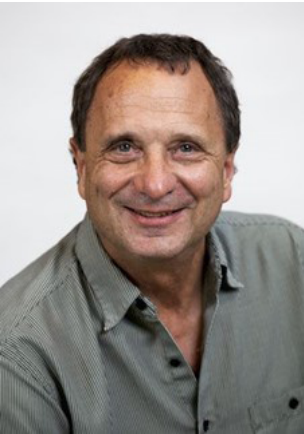
It was another great idea hatched somewhere off the west coast of Canada. They were always coming – some realistic and others, perhaps a bit far-fetched. After the rest of us had long retired to our bunks, Kim Juniper would continue to dream in the aft lab: we could set up cameras to film worms fighting at vents; we could ship the ROV across the Pacific to explore volcanoes; we could buy a support ship and power it by hydrogen…(and only one of those was a partial failure). Those ideas kept coming, inspiring his colleagues and students. Kim was the epitome of a positive thinker even in the face of hurdles that would overwhelm most of us.
Kim was raised in the middle of Canada in a mid-sized town in Saskatchewan. His formative years left a life-long appreciation for wilderness adventure, swimming and canoeing, moose meat and indigenous knowledge. Yet, it was the books and films of Jacques Cousteau that resonated most deeply. After receiving a Zoology degree from the University of Alberta, Kim sought an ocean experience and landed on the mudflats near Christchurch, New Zealand. His doctoral work focussed on the interactions between deposit-feeding snails and microbes and the die was cast: the role of microbes in marine ecosystems became the central theme of his subsequent research programmes.
A post-doctoral position at the Institute of Ocean Sciences on Vancouver Island brought Kim back to Canada in 1982, where he took part in a dive in the Pisces IV submersible and discovered vast mats of sulphide-oxidizing bacteria on the bottom of Saanich Inlet. Eager to find more microbe-dominated ecosystems, he joined an expedition to hunt for hot vents on the Juan de Fuca Ridge the next year. The Axial Seamount cruise with Pisces IV opened his horizon to the deep ocean and the intricate relationships between biological and geochemical processes. Kim developed a breadth of interests and of colleagues: microbes in symbiosis, in worm mucus, affecting mineral deposition, and in vent community development. He took up a research associate position at IFREMER in Brittany, France, where he developed skills using deep-sea imagery to examine chemosynthetic community spatial patterns. Here, Kim formed lasting connections to France, not least because he met and married Laurence Patris. Frequent visits thereafter renewed research and family ties throughout his life.
An offer of a faculty position from the Université du Québec à Rimouski soon introduced Laurence to Canadian winters and Kim to travel restricted by snowfalls. Nevertheless, he maintained his interests in west coast ecosystems, sponsoring students to study both seamounts and the expanding discoveries of hot vents in Canadian waters. In 1991, Kim moved to the Université du Québec à Montréal where he stayed for 15 years. Two children were born: Glenn and Fiona. At UQaM, Kim assumed Directorship of GEOTOP – a provincial inter-university training and research centre focussing on geosciences with special expertise in stable isotopes. Here, he explored the seasonal changes of Arctic sea-ice microbial ecosystems and denitrification in sediments. The work at hot vents continued and benefitted from GEOTOP expertise as Kim and his students explored a wide array of techniques to unravel relationships in the community . During this time, Kim was also involved in Canada’s contributions to the Joint Global Ocean Flux Study (JGOFS).
Kim remained deeply committed to the development of access to Canada’s deep ocean. After Pisces IV was sold, the Canadian government sponsored construction of an experimental ROV, ROPOS, in the late ‘80s . But it was a shaky start and ROPOS was soon passed to a nascent private organization: the Canadian Scientific Submersible Facility (CSSF). Kim and a handful of supporters raised money while a skilled team of technicians and pilots rose to every challenge – they were legends. Keith Shepherd, CSSF’s General Manager, recalls that Kim was key in shaping the philosophy of support for science and for students. Kim was President of CSSF from 2001 to 2011 during which time securing funding for expeditions and upgrades was a constant challenge as the Facility strove to maintain a reputation for excellence. Kim developed business acumen as he helped to expand the user base to international clients, some of whom became research colleagues. To date, the ROV ROPOS has operated in four oceans.
The final move for the Juniper family came in 2006, when the University of Victoria offered Kim the prestigious British Columbia Leadership Chair in Ocean Ecosystems and Global Change. Here, he was appointed Professor in the School of Earth and Ocean Sciences and in the Department of Biology. Now, fieldwork was easier: the local mudflats, nearby Saanich Inlet, ROPOS and ships in the neighbourhood, plus the home base for the VENUS/NEPTUNE cabled observatories on campus. Born from the vision of John Delaney to cable the entire Juan de Fuca Plate, it was Canada that was able to move first. VENUS was the first test of concept as NEPTUNE Canada slowly gathered support to lay a cable loop to the hydrothermal vents 200 km offshore. Kim was deeply involved in proposals to fund science workshops in the late 1990s. He became co-Chief Scientist in the earliest days of NEPTUNE Canada. Later, he assumed the same role within Ocean Networks Canada. The Strategic Plan that Kim developed will guide ONC through to 2030. He was a tireless campaigner for the Observatory as his many travels raised awareness, gathered users, engaged partnerships and sought new tools to understand the changing ocean. Kim was particularly proud of the Indigenous Ocean Governance Forum at Ocean Observing ’19 (Hawai’i) which he facilitated in many ways; he was very hopeful of growing relationships with indigenous communities around the Pacific. Due much to Kim’s engaging approach to partnership, there are now observatories in the Pacific, Atlantic, Arctic and Antarctic oceans.
At the University of Victoria (UVic), Kim supervised another ten graduate students, the last of whom is set to graduate next spring. These students continued down some familiar research avenues—Saanich Inlet nitrogen cycling , mud flats, hot vent fauna and microbes—and, with his unwavering support, forged new research paths of their own (Arctic community research engagement, blue carbon, and symbiont population structure using CRISPR haplotyping). Kim always saw the value of Saanich Inlet as the “ideal natural laboratory” and supported two previous students in further research on nitrous oxide cycling by facilitating ship and lab access through the University. Even after his cancer diagnosis, he frequently asked about his remaining students to make sure they were well supported.
Kim was deeply proud of his students’ accomplishments. He had a knack of playing to their strengths with humour and wisdom and opened many doors due to his extensive network of contacts. He also encouraged interests in social sciences and the arts (if you can write about it, then try performing it). When Paul Snelgrove of Memorial University hatched the concept of CHONe (Canadian Healthy Oceans Network) that would feature country-wide training of Canada’s next marine scientists, Kim was all in. He served for 12 years in leadership and advisory roles as the network opened opportunities for more than 100 students and postdocs
The great ideas continued to flow, even through the last year as Kim struggled with brain cancer; the positive view was still there. He dreamed of spending retirement writing a book about indigenous relationships with the sea in Hawai’i. He was ready: he had taken ukulele lessons. Kim’s legacy lies in his research students (44 over his career), in 130+ publications, in formalized advice to several organizations, and in those ideas that still circulate.
Contributed by Verena Tunnicliffe, John Dower, Cat Stevens and Sheryl Murdock
Form DSL23
https://www.uvic.ca/news/topics/2024+kim-juniper-in-memoriam+news
From the University of Victoria
