

By: Johanna Weston, Postdoctoral Investigator at the Woods Hole Oceanographic Institution
What do bivalves, polychaetes, and echinoderms have in common? They are invertebrates that live on the seafloor as adults. Young animals, or larvae, live in the water column and are carried by ocean currents. Like caterpillars are to butterflies – larvae can look quite different to adults, undergoing a metamorphosis as they settle back down to the ocean floor. Studying these young animals’ distribution is imperative, especially in regions like the Arctic, where the impacts of global climate change are accelerated.
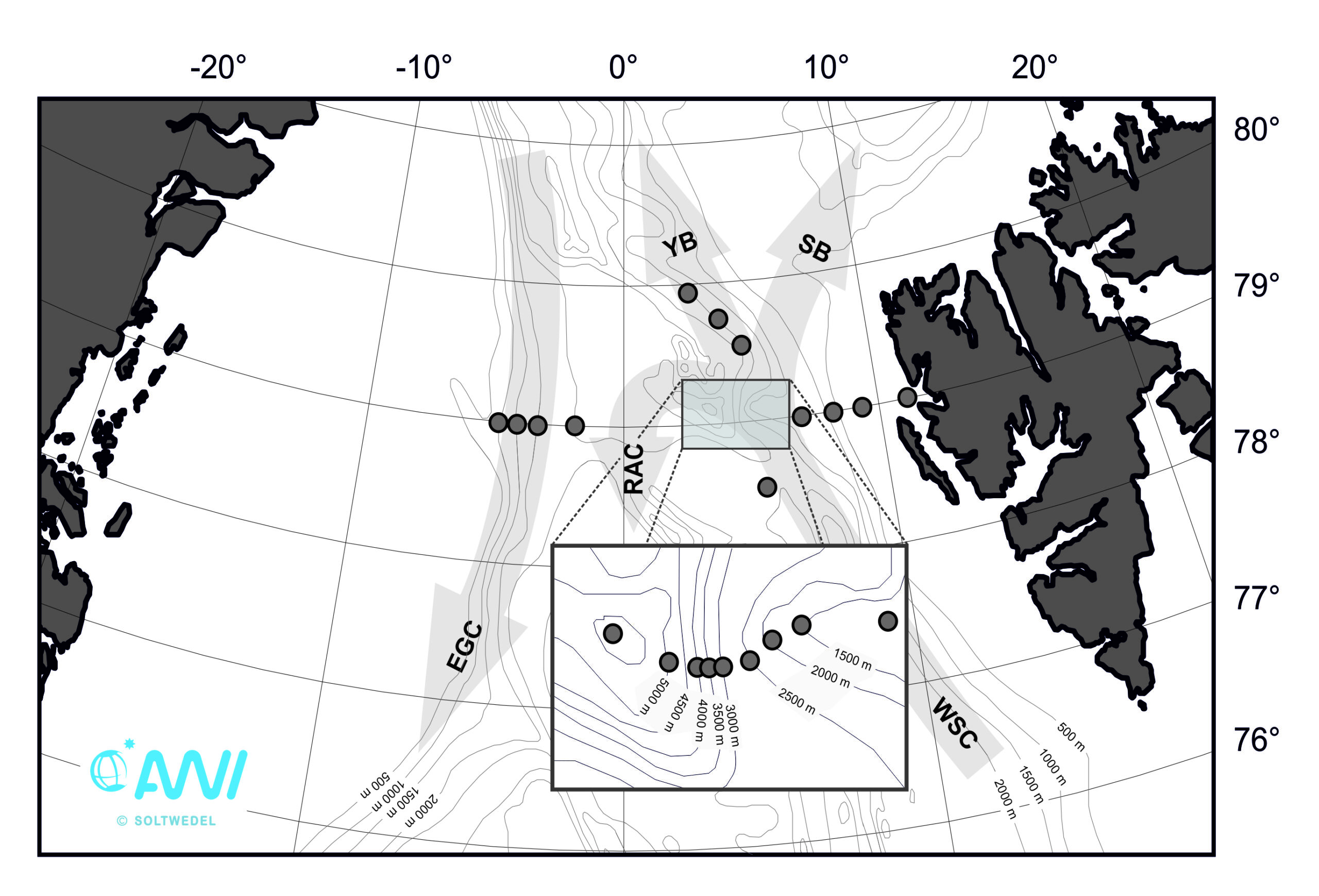
With travel funding from the Deep-Sea Biology Society, I joined my postdoc advisor, Dr. Kirstin Meyer-Kaiser of the Woods Hole Oceanographic Institution (WHOI), on a research expedition aboard the German ice-breaking vessel R/V Polarstern. Leaving Bremerhaven, Germany, we steamed for seven days to the research area—the HAUSGARTEN, a special long-term ecological research (LTER) observatory in the Fram Strait between Greenland and Svalbard. Twenty-five years ago, the Alfred Wegner Institute established the HAUSGARTERN to record and monitor the transition zone between the North Atlantic and the central Arctic Ocean. The HAUSGARTEN LTER consists of 21 permanent stations covering a water depth range of 250 to 5500 m, at Molloy Deep, the deepest point in the Arctic.
The HAUSGARTEN is an ideal place to look for larvae. On the expedition PS143/1, the Meyer-Kaiser Lab aimed to characterize larval dispersal across the ocean floor and determine whether new species might expand their distributions northward. These permanent stations are laid out in a T-shape across the Fram Strait, spanning the two major currents. The West Spitsbergen Current flows on the eastern side, bringing warm, high-nutrient water from the North Atlantic to the Central Arctic. The West Spitsbergen Current carries larvae from the coast of Svalbard and some from the North Atlantic. Towards the west, the East Greenland Current brings colder, clear, and fresher water from the Central Arctic southward. This current trend tends to host fewer larvae, which reflects that fewer species live in the Central Arctic. These two currents are quite contrasting and have far-reaching implications for biodiversity in the Arctic.
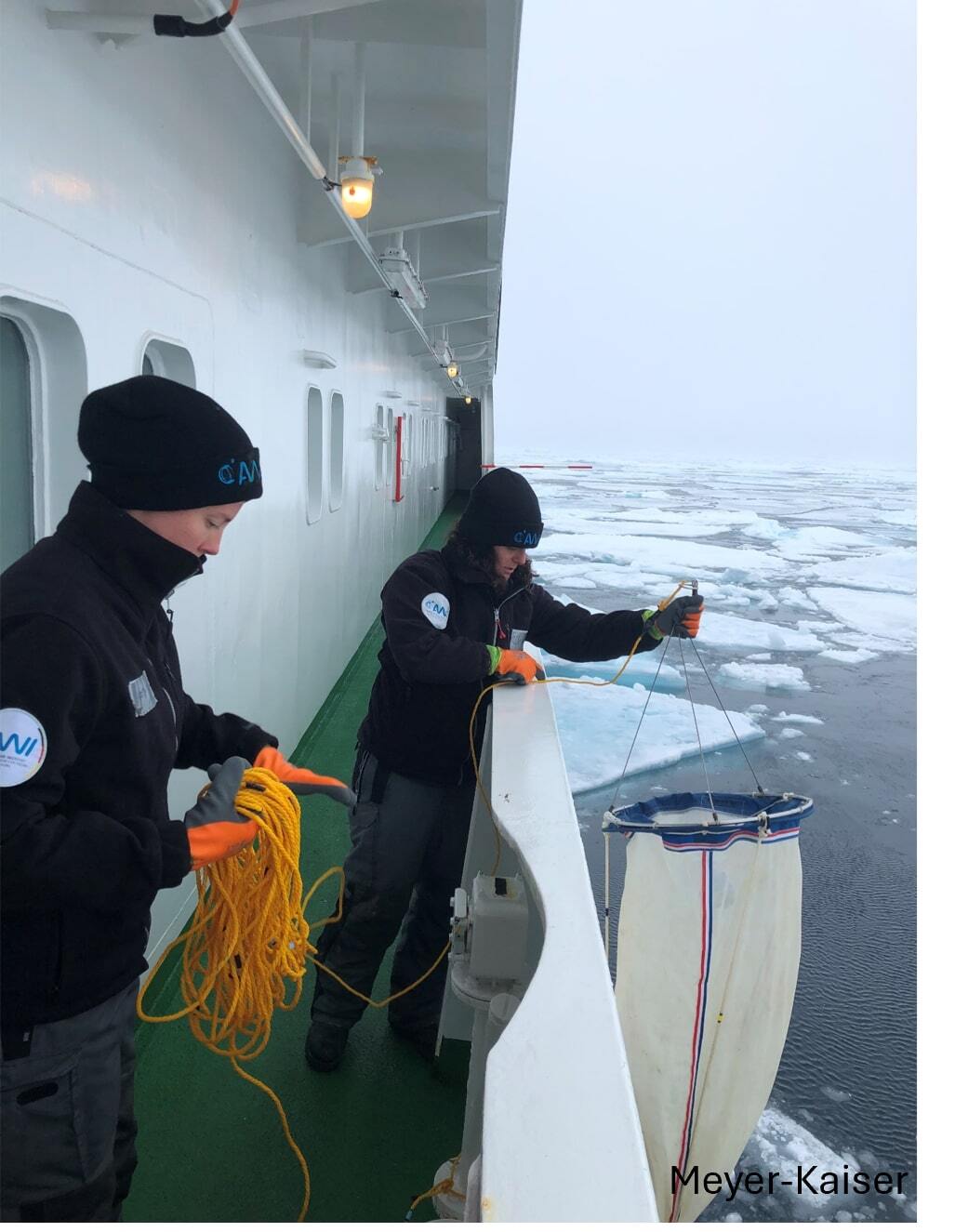
For three weeks in the HAUSGARTEN, we searched around the clock for larvae using a broad combination of tools. Every time the CTD was in the water, we followed behind it in the schedule with our 63 µm mesh hand net to search the upper 20 m of water. We deployed our net across the open ocean and in the middle of the ice. We searched the deep seafloor with a larval net mounted to Senkenberg’s epibenthic sled. We also enlisted the help of GEOMAR’s remotely operated vehicle, KIEL 6000, to pick up larval traps that had been patiently sitting on the seafloor since 2019.
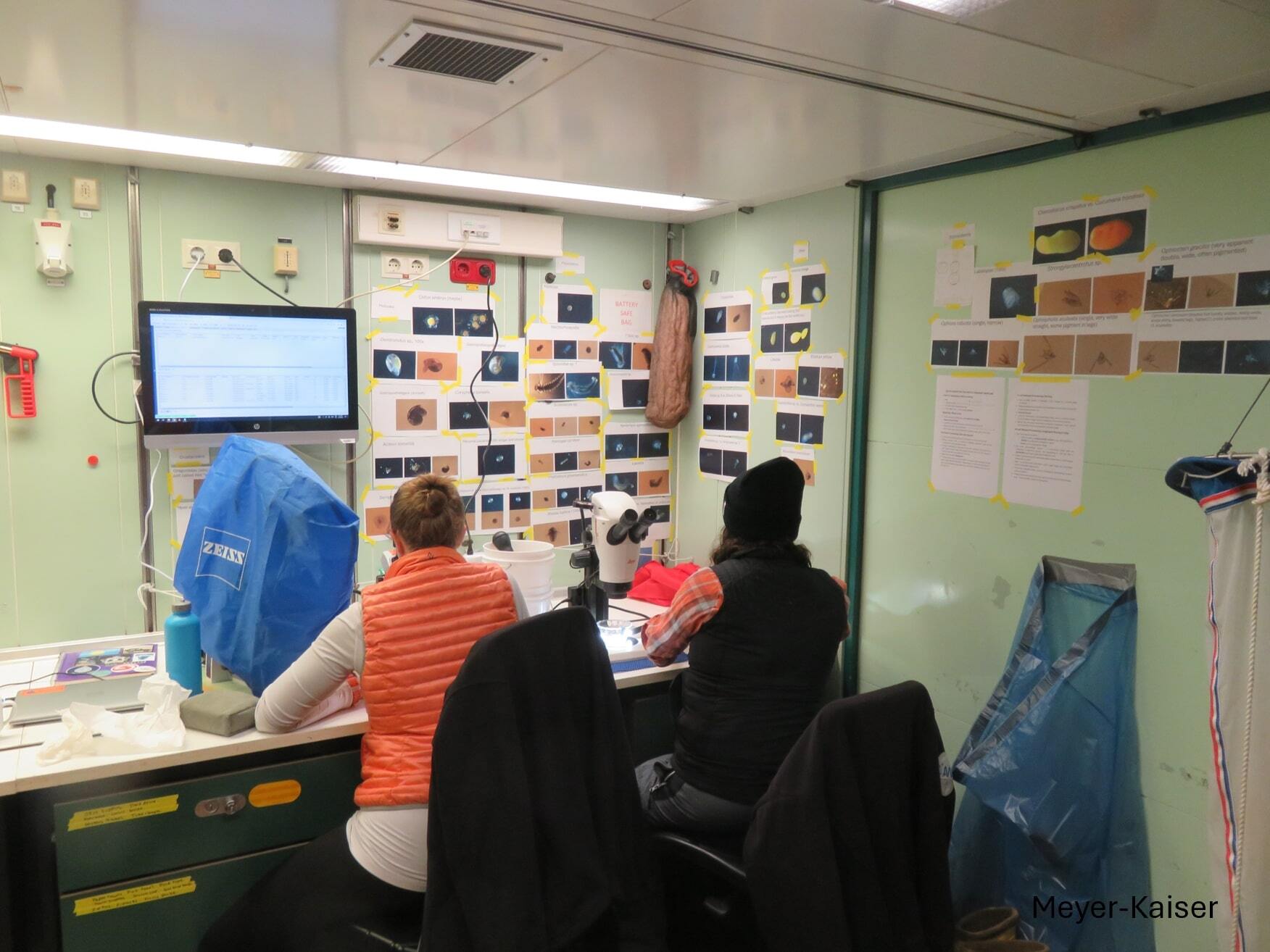
Once the samples arrived on the ship, we processed them immediately. Kirstin and I worked shoulder-to-shoulder at dissecting microscopes for hours, picking out larvae from amongst the phytoplankton blooms and active copepods. We worked at a volume of one turkey baster at a time. Once we picked out all the larvae (and potential larvae and embryos), we imaged each morphotype on a compound microscope and cataloged it into tubes.
All the hard, and at times sleepless, fieldwork is a success. We amassed a collection of >2400 larvae stored in 370 tubes from 39 sampling actions at 26 stations. We collected >45 unique morphotypes from echinoderms, polychaetes, molluscs, gastropods, bivalves, fish, and crustaceans. Thanks to identification work by MIT-WHOI Joint Program PhD student Kharis Schrage, we could confidently identify many to species. Three of my personal favorites were (1) Galathowenia oculate – a segmented worm as an adult and as a larva that has a translucent oval body with an umbrella of iridescent blue spines, (2) Ophiocten gracilis – a brittle-star as an adult and as a larva, or pluteus, it a beautiful skeleton dinner-bell triangle, and (3) Balanus balanus – a acorn barnacle and as a larva, or cyprid, it looks like a happy cartoon whale.
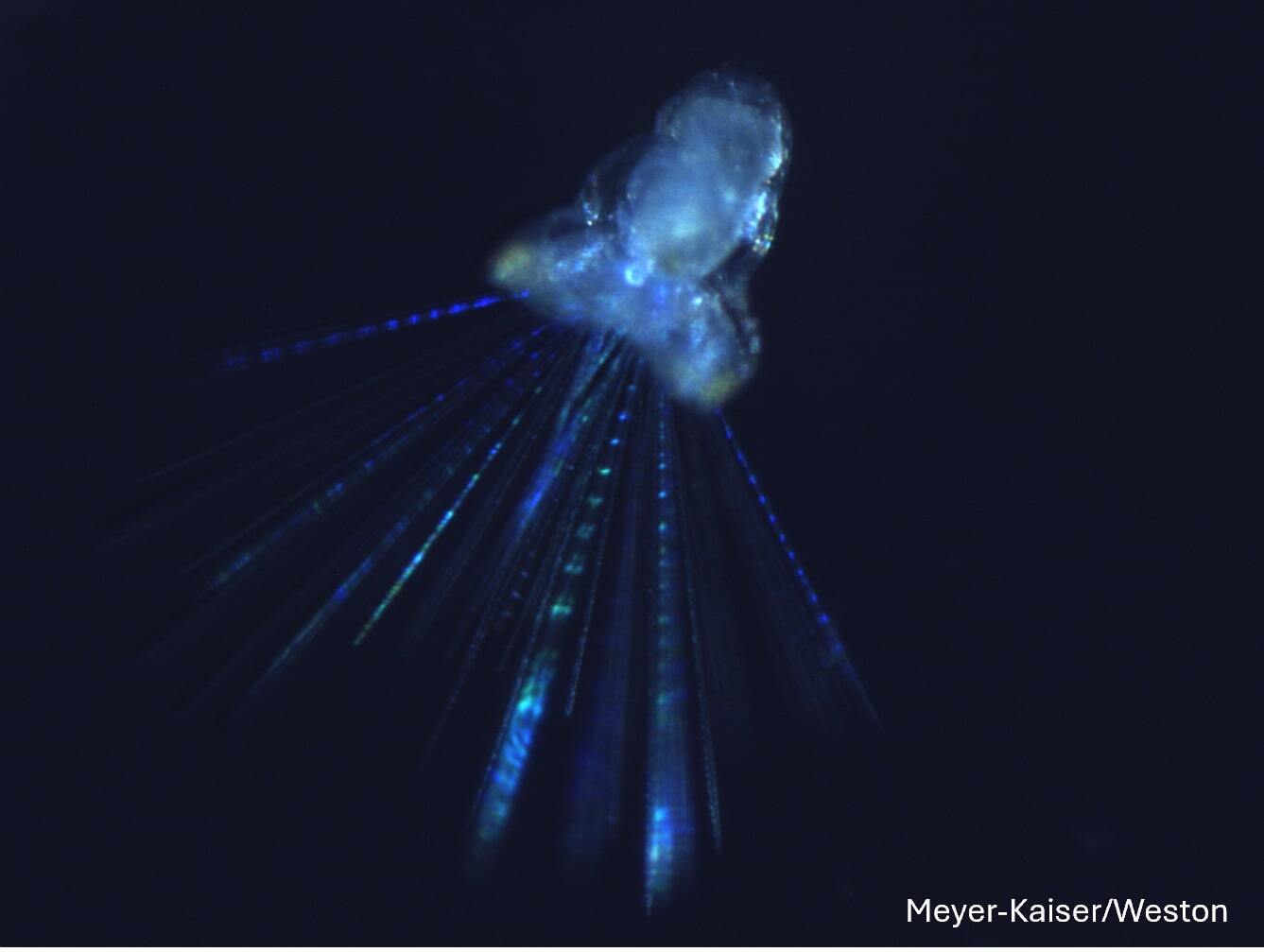
Credits: Kirstin Meyer-Kaiser/Johanna Weston.
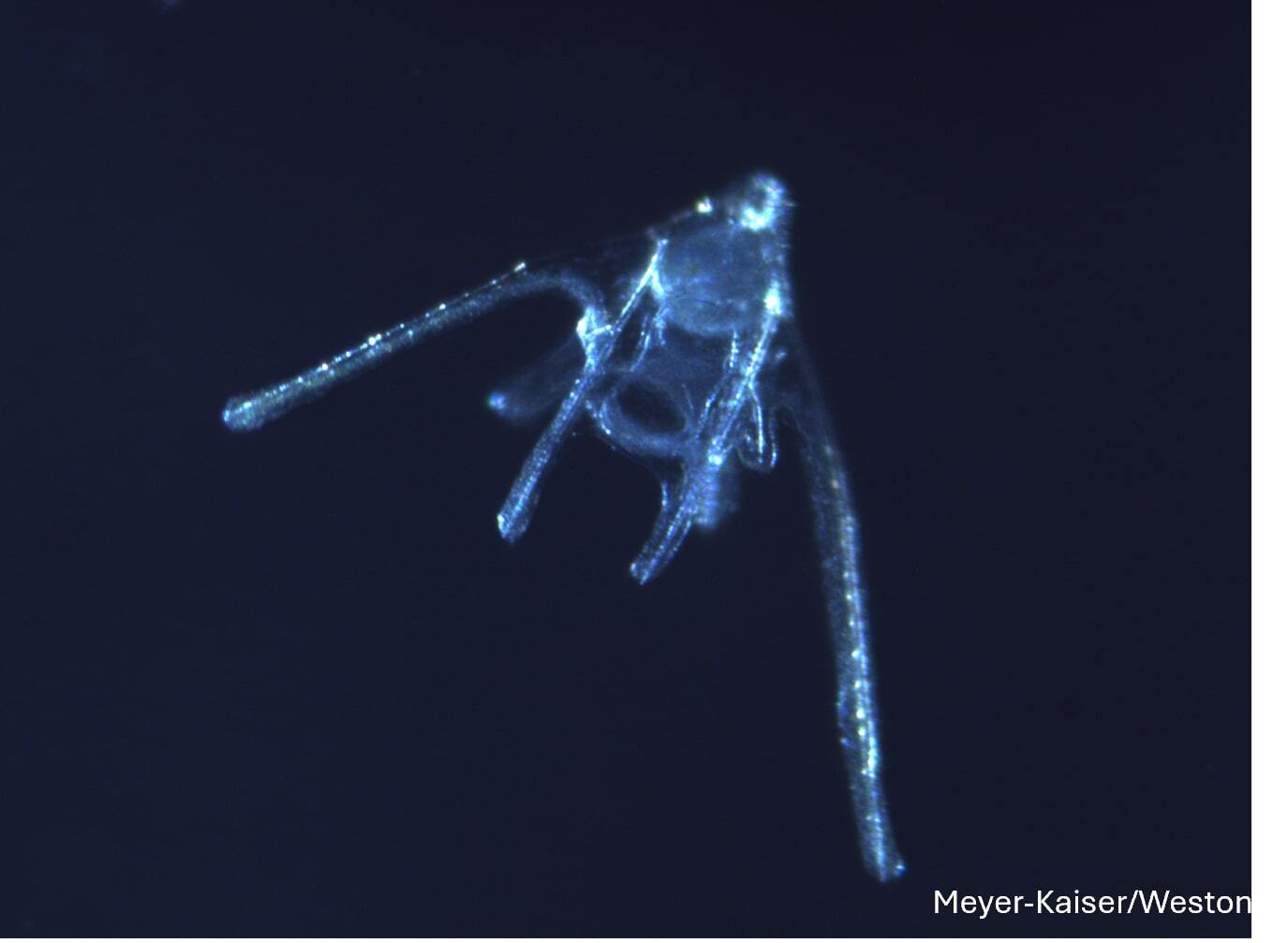
Credits: Kirstin Meyer-Kaiser/Johanna Weston.
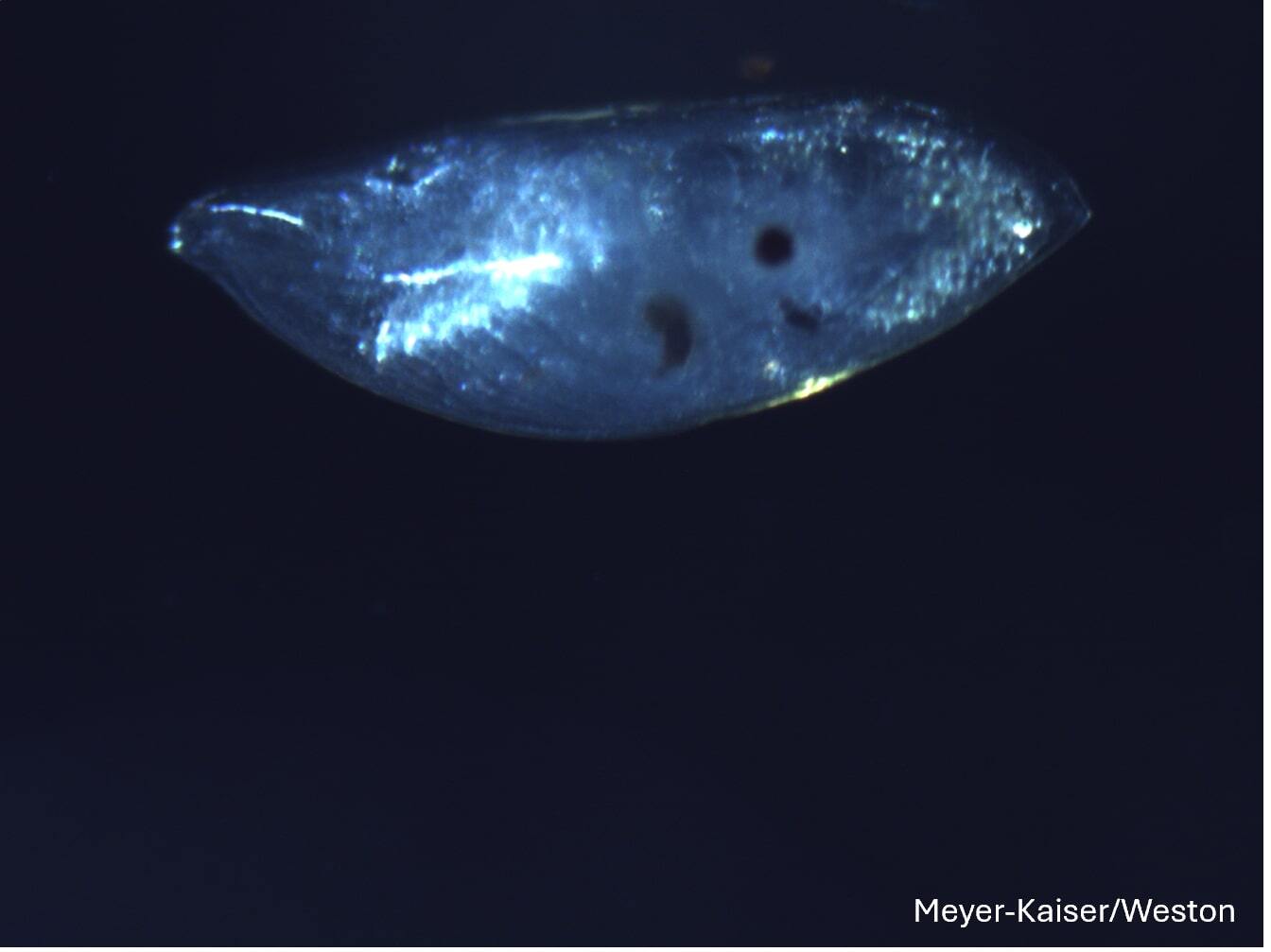
Credits: Kirstin Meyer-Kaiser/Johanna Weston.
Excitingly, some morphotypes were not on Kharis’s list! Back at WHOI’s Meyer-Kaiser Lab, the next step for the larvae is to determine their taxonomic identifications. Because larvae look so different from adults and species descriptions tend not to include the larval stage, morphological identifications are tricky. We employ a secondary data type, DNA barcoding, to get around this data gap. By targeting a DNA barcode region like COI or 16S and mining databases like GenBank and BOLD, which have sequences from adults, we can resolve many identifications to family, genus, and even species level. Additionally, with robust identifications and counts, we will also be analyzing patterns in community diversity and compositions and pair that with key oceanographic data, like temperature, salinity, and phytoplankton community, to better understand how larvae are transported between the North Atlantic and the Central Arctic.
While we spent most hours sampling or processing samples, we were afforded moments to soak in the special Arctic ecosystem and bond with the nearly 50 other internationally based scientists. As my first time in the Arctic, standing against the wind as we crossed the Arctic Circle was amazing. One of the most unforgettable moments was being in the middle of the East Greenland station sampling, and the whole ship paused to admire an Arctic icon, the polar bear or ice bear in German.
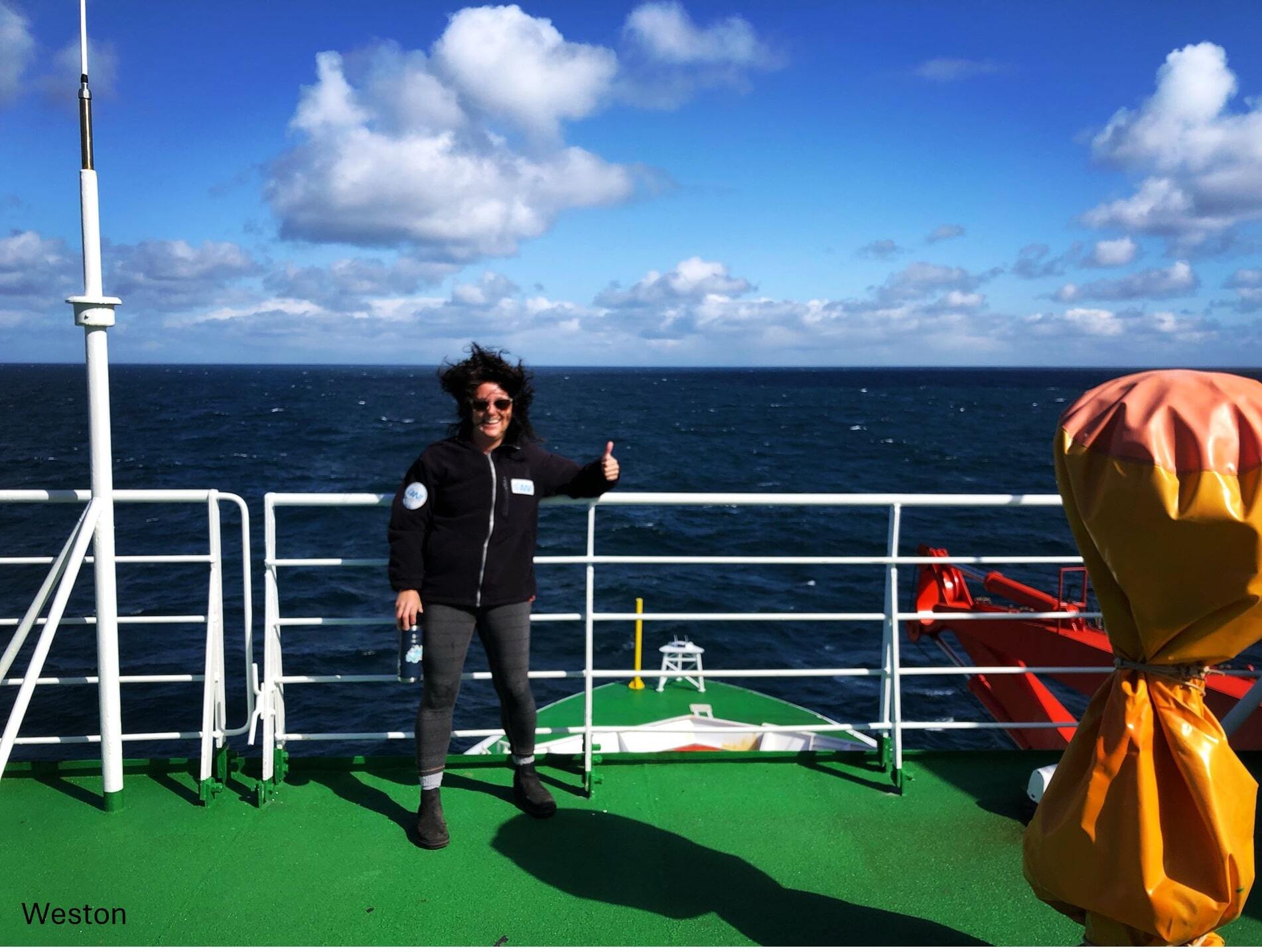
Credits: Kirstin Meyer-Kaiser/Johanna Weston
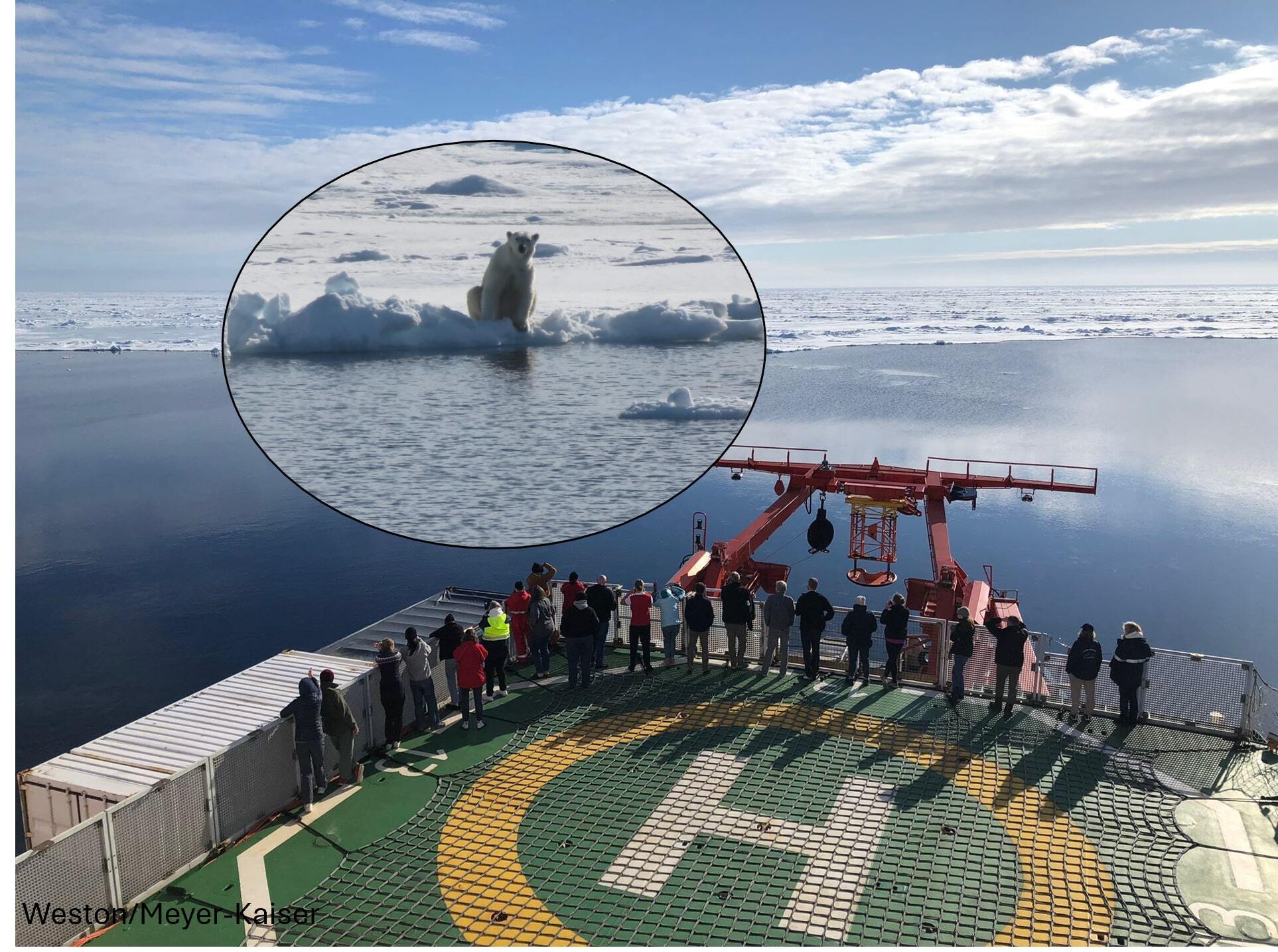
Credits: Kirstin Meyer-Kaiser/Johanna Weston
From the tiniest larvae to the most powerful predators, our Blue Planet hosts immense beauty. As I return to WHOI, I am grateful for the unforgettable and research-expanding opportunity to be part of HAUSGARTEN’s scientific legacy and work alongside many kind, curious, and dedicated scientists and crew. THANK YOU DEEP-SEA BIOLOGY SOCIETY!
July 15, 2024
This post is an original contribution to the Deep Sea Biology Society, that provided travel support to Dr. Weston for RV Polarstern cruise PS143/1
